
Sweepstakes Casino vs. Real Money Casino: Regulation, Payouts, and Player Protections
 Available in US
A question that lands in my inbox at least twice a week, every week, for the past three years: “What’s the difference between sweepstakes casinos and regular online casinos?” The question sounds simple. The answer is anything but.
On the surface, the two models look nearly identical. Both offer casino-style games — slots, blackjack, roulette, poker. Both involve spending money. Both can result in real cash payouts. A player who has used one would recognize the interface, the game mechanics, and the general flow of the other immediately. But underneath that visual similarity, the two models diverge in ways that affect everything from legal exposure to consumer protection to how much money you’re statistically likely to lose.
The sweepstakes casino industry generated roughly $3.4 billion in net gaming revenue in 2024. Regulated iGaming in the U.S. — the licensed online casino market operating in states like New Jersey, Michigan, and Pennsylvania — generated approximately $7.2 billion. These are not fringe categories; they are multi-billion-dollar industries serving overlapping audiences with fundamentally different regulatory, economic, and player-protection structures. An AGA survey of 2,250 players found that 90% of sweepstakes casino users consider the activity gambling, and 69% describe these platforms as places for real-money wagering — despite the legal classification that says otherwise.
This article is the comparison I’d want if I were a player deciding between the two models, or a regulator trying to understand why the distinction matters. I cover regulation, access, economics, payouts, and player protections with data behind every claim. I also address the crossover dynamic — the growing body of evidence suggesting that sweepstakes casinos serve as a pathway to real-money gambling for some players — because that transition is where individual risk concentrates.
The Regulatory Divide: Licensed vs. Unregulated
The single biggest difference between these two models isn’t the games, the payouts, or the player experience. It’s who’s watching. And in the case of sweepstakes casinos, the honest answer is: almost nobody, at least in the way most people understand regulatory oversight.
Real-money online casinos in the United States operate under state-issued gambling licenses. In New Jersey, the Division of Gaming Enforcement audits operators, reviews game fairness, mandates minimum RTP standards, requires segregated player funds, and can revoke licenses for violations. Michigan, Pennsylvania, West Virginia, Connecticut, and Delaware maintain similar regulatory apparatuses. These agencies have teeth — they fine operators, suspend licenses, mandate corrective action, and publish enforcement records publicly. Players in licensed states have a clear path for complaints, disputes, and recourse.
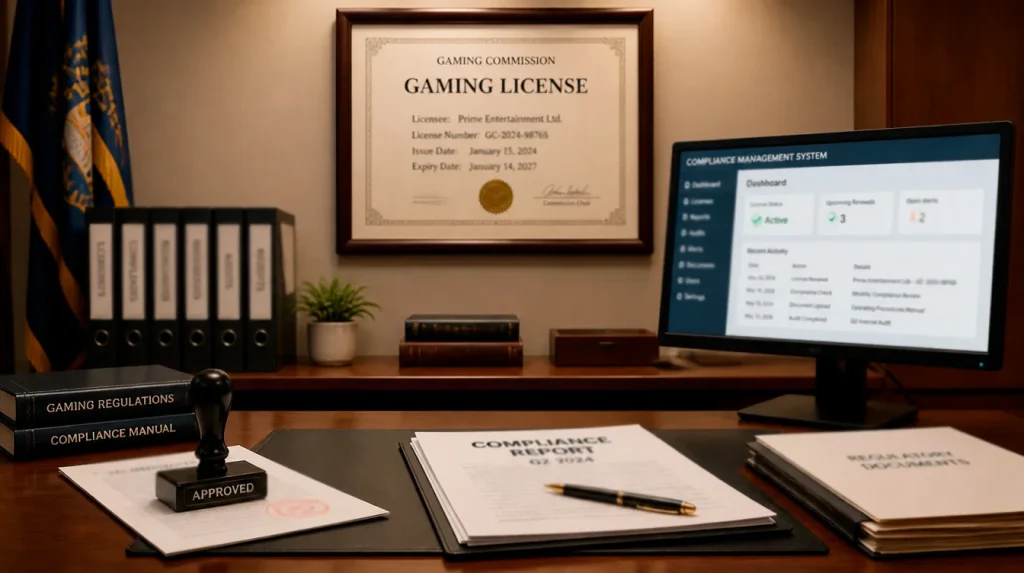
Sweepstakes casinos hold no equivalent licenses. They operate under the legal theory that their dual-currency model makes them sweepstakes promotions rather than gambling operations, which means they fall outside the jurisdiction of state gaming commissions. No gaming regulator audits their random number generators. No state agency mandates minimum payout percentages. No public enforcement record documents violations or corrective actions. Tres York, the AGA’s VP of Government Relations, has been blunt about this gap: these operators “present themselves like legal, regulated platforms — but they operate outside the law and regulation. There are few, if any, responsible gaming tools, no regulatory oversight, and no consumer protections.”
The industry’s counter-argument comes through the Social Gaming Leadership Alliance, which advocates for voluntary standards and has pushed back against characterizations of the model as unregulated. Some operators voluntarily submit to third-party game audits, publish RTP data, and implement responsible gaming tools. But “voluntary” is the operative word — nothing compels these measures, nothing prevents an operator from discontinuing them, and no external authority verifies compliance. The comparison with social casinos further illustrates where this regulatory gap creates distinct consumer experiences.
This regulatory asymmetry has economic consequences that cascade through the rest of the comparison. Licensed operators bear significant compliance costs — gaming taxes, audit fees, dedicated compliance staff, mandatory responsible gaming programs. Sweepstakes operators avoid these costs, which gives them a structural advantage on margins but removes the consumer protections those costs fund.
Access and State Availability: 42 States vs. 6
If you live in Ohio and want to play online casino games for real money, your options are zero. Ohio has legal sports betting but no licensed iGaming. The same is true for players in Texas, Florida, Georgia, Illinois, and roughly 44 other states. Licensed online casinos — the fully regulated kind with state gaming commission oversight — are legal in just six states plus the District of Columbia as of mid-2026.
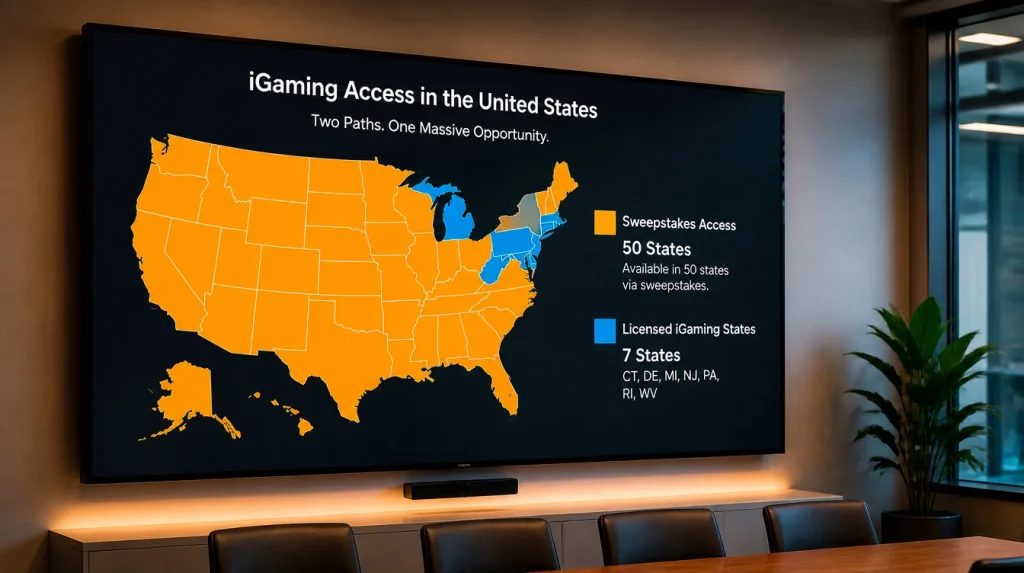
Sweepstakes casinos, by contrast, are accessible in approximately 42 states. That 42-to-6 gap is the single most powerful driver of sweepstakes casino adoption. For the vast majority of American adults, sweepstakes casinos are the only way to play casino-style games online and have any possibility of receiving cash prizes. The demand isn’t manufactured by marketing; it’s created by a regulatory vacuum. Hundreds of millions of adults live in states where regulated iGaming doesn’t exist, and sweepstakes casinos fill that gap.
This accessibility advantage is narrowing from both directions. The sweepstakes side is losing states to bans — California, New York, New Jersey, Connecticut, Montana, Maine, Indiana, and others have enacted or are enacting restrictions. The iGaming side is slowly expanding — state legislatures periodically consider bills to legalize regulated online casinos, though progress has been incremental. If major states like Florida or Texas ever legalize iGaming, the accessibility gap that fuels sweepstakes casino growth would compress significantly. But “if” and “when” are doing heavy lifting in that sentence; neither state shows imminent movement toward iGaming legalization.
The accessibility dynamic also explains the demographic profile of sweepstakes casino players. Roughly 71% of players fall in the 21-34 age bracket, up from 54% in 2023. This is a generation that grew up with mobile gaming and expects digital entertainment to be available on demand. When the regulated alternative simply doesn’t exist in their state, sweepstakes casinos become the default — not because players chose them over licensed options, but because licensed options were never available to begin with.
The scale of that unserved market is staggering. Approximately 55 million Americans play sweepstakes casino games, according to the Social Gaming Leadership Alliance. That number dwarfs the player base of licensed iGaming in its six-state footprint. Whether those 55 million players would migrate to regulated platforms if iGaming expanded nationally is one of the pivotal unanswered questions in the U.S. gambling industry — and the answer would reshape both models fundamentally.
How Each Model Makes Money from Players
Both models make money the same fundamental way: players put money in, and operators keep a percentage. The wrappers are different — real-money casinos call it wagering, sweepstakes casinos call it Gold Coin purchases with bonus Sweeps Coins — but the cash flow direction is identical. Money flows from players to operators. A portion flows back as prizes or winnings. The operator retains the difference.
In 2024, the sweepstakes casino industry processed $10.6 billion in Gold Coin purchases and generated $3.4 billion in net gaming revenue. Those purchase numbers grew to an estimated $11-14.3 billion in 2025. The net revenue figure represents what’s left after paying out prizes — the operator’s actual earnings from the activity.
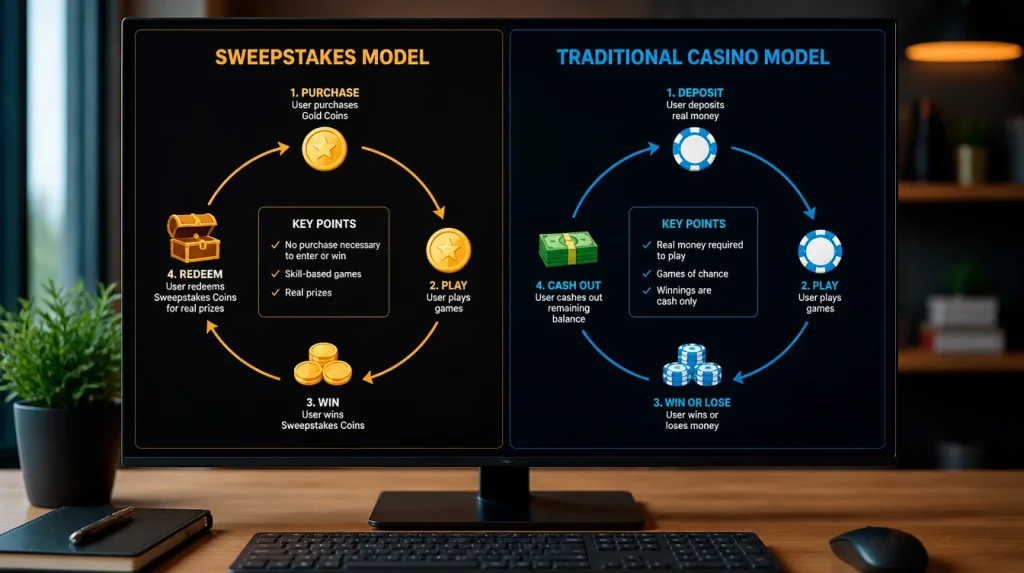
Licensed online casinos generate revenue through direct wagering. A player deposits $100, places bets, and the house edge ensures the casino retains a mathematical advantage over time. The key financial difference isn’t in the mechanics — it’s in the tax treatment. Licensed iGaming operators pay gaming-specific taxes that range from 15% in some states to over 50% in others, layered on top of standard corporate income taxes. Sweepstakes casinos pay corporate income taxes on profits but no gaming-specific levies, because their operations aren’t classified as gambling for tax purposes.
This tax differential is not a small number. If sweepstakes casino revenue were subject to the same gaming taxes as licensed operators, billions of dollars would flow to state treasuries. The AGA and state gaming commissions frequently cite this lost revenue in their advocacy for banning sweepstakes casinos. From the state’s perspective, two operators providing essentially identical consumer experiences — but one pays gaming taxes and the other doesn’t — represents an unlevel playing field that costs the state significant revenue.
The competitive friction extends to marketing spend. Nearly half of all online casino advertising consumers encountered in early 2025 came from offshore sweepstakes operators, according to AGA analysis of Sensor Tower data. Licensed operators, already bearing higher tax and compliance costs, found themselves outspent in advertising by competitors who could allocate more budget to customer acquisition because they weren’t paying gaming-specific taxes. That dynamic contributed to Google’s October 2025 decision to reclassify sweepstakes casinos from “social casino games” to gambling products in its advertising policy — a change that theoretically leveled the paid media playing field, though enforcement has been uneven.
Payout Ratios and Player Returns Compared
Do sweepstakes casinos return more or less to players than real-money casinos? It’s the question everyone asks and the one with the most nuanced answer.
Sweepstakes casino payout ratios — the percentage of total purchases returned to players as prizes — hover at 68-72%, based on net revenue calculations derived from purchase volume and net gaming revenue data. In the 2025 reporting period, operators took in an estimated $11-14.3 billion in purchases and retained $3.6-4.2 billion as net revenue, putting the implied payout ratio in that 68-72% range.
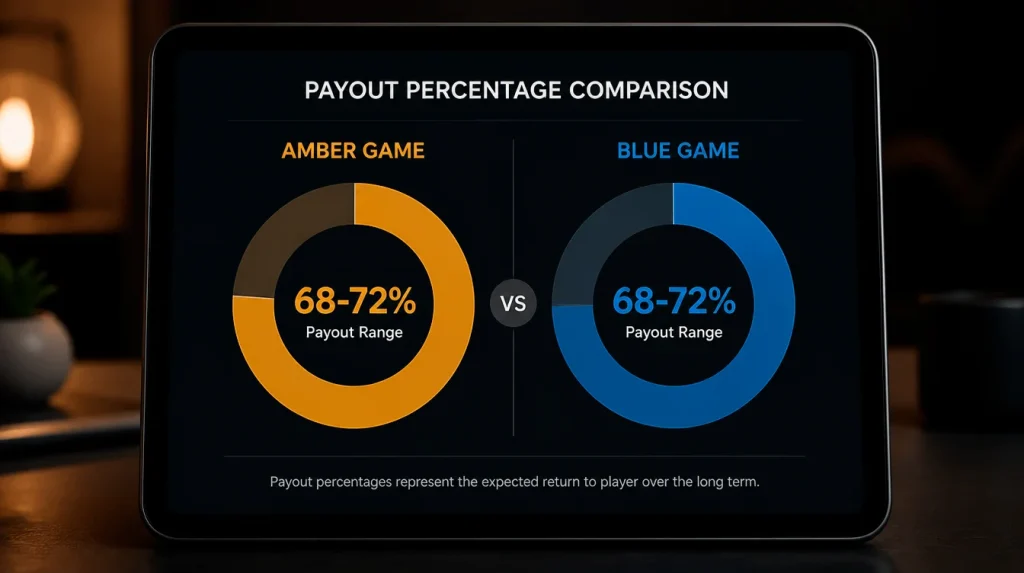
Licensed online casinos typically advertise game-level RTPs (Return to Player) in the 92-97% range for slots, with table games often higher. But comparing a game-level RTP to an operator-level payout ratio is like comparing a car’s fuel efficiency on a test track to its real-world mileage. The 95% RTP on a specific slot means that, over millions of spins, the game returns 95 cents of every dollar wagered. But a player who deposits $100 and wagers that money multiple times — which is how casino play works — will see their balance erode faster than the per-spin RTP suggests, because each wager cycle takes its mathematical toll.
The more accurate comparison would be “net revenue as a percentage of total deposits” for licensed casinos versus “net revenue as a percentage of total purchases” for sweepstakes casinos. Both numbers reflect the same economic reality: what percentage of player money the operator keeps. And by that measure, the two models produce surprisingly similar results, which is one of the strongest data points supporting the argument that sweepstakes casinos are functionally equivalent to gambling regardless of their legal classification.
Player Protections: What Each Model Offers
This is where the comparison gets uncomfortable, because the gap in player protections between the two models is significant — and it’s not closing as fast as the industry’s growth would warrant.
Licensed online casinos in regulated states are required to implement a suite of responsible gaming measures: mandatory self-exclusion registries, deposit limits, session time alerts, cooling-off periods, links to problem gambling resources, and in some states, AI-driven behavioral monitoring that flags at-risk play patterns. These aren’t optional features; they’re license conditions enforced by regulatory agencies with the power to fine or shut down non-compliant operators. In states with mature iGaming markets, the regulatory framework has been refined through years of enforcement and stakeholder feedback.
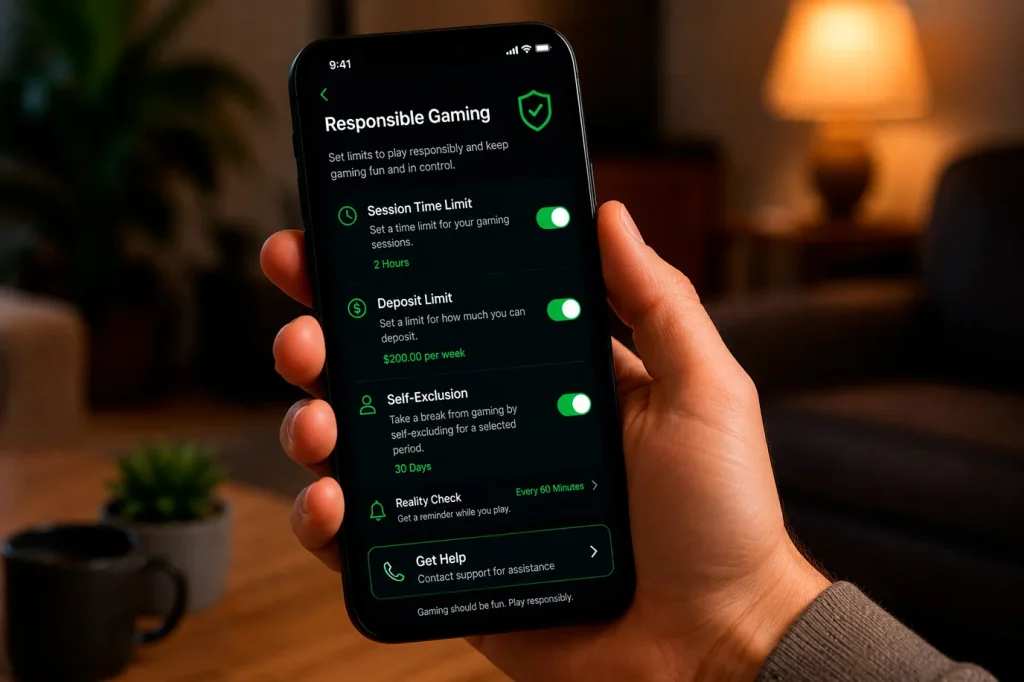
Sweepstakes casinos implement responsible gaming tools on a voluntary basis, and the extent varies dramatically across operators. Some leading platforms offer session time reminders, purchase limits, and self-exclusion options. Others offer little beyond a link to the NCPG helpline in their footer. Only 45% of Americans know where to get help for a gambling problem, according to the NCPG — a statistic that highlights the importance of proactive helpline visibility at any platform where real money is at stake.
The absence of mandatory protections matters most at the margins — for the players who need guardrails the most. A player developing problematic patterns at a licensed online casino will encounter mandatory session alerts, can be flagged by behavioral monitoring systems, and can self-exclude from all licensed operators in the state through a centralized registry. That same player at a sweepstakes casino may encounter none of those interventions, and self-exclusion from one platform does nothing to prevent them from opening an account at any of the other 50-60 active operators in the market.
Public attitudes toward the gaming industry’s commitment to responsible play have improved — 64% of Americans now believe the industry is committed to responsible gaming, up from less than 40% in 2018. But that statistic encompasses the regulated sector, where mandatory protections drive visible action. Whether sweepstakes casinos contribute to or undermine that improving perception depends on whether voluntary measures can match the rigor of regulatory mandates. The data so far suggests they can’t — not consistently, not across the industry, and not for the players who need them most.
The Gateway Effect: From Sweeps to Real-Money Play
I want to handle this section carefully, because the data here intersects with real human consequences. Researchers have identified a pattern in which some sweepstakes casino players transition to real-money online gambling — a dynamic sometimes described as a “gateway effect” or “entry bridge.” The evidence is still developing, but the directional signal is consistent enough to warrant serious attention.

The mechanism is intuitive. A player in a state without legal iGaming discovers sweepstakes casinos, develops familiarity with casino-style gameplay, experiences the dopamine feedback loop of wins and near-misses, and eventually seeks out real-money platforms — either by traveling to a regulated state, accessing offshore sites, or transitioning when their state eventually legalizes iGaming. The sweepstakes experience normalizes the activity, builds comfort with the mechanics, and in some cases, creates appetite for higher-stakes play that sweepstakes casinos can’t satisfy.
The advertising dimension adds another layer. With nearly half of all online casino ads in early 2025 originating from sweepstakes operators, the sheer volume of exposure introduces casino-style gaming to audiences who might not have encountered it otherwise. For a 22-year-old in Texas who has never visited a physical casino, a sweepstakes casino ad on Instagram is likely the first touchpoint with casino gameplay — and the experience that follows shapes expectations and appetite for years to come.
The broader gambling landscape provides context. A record 134 million American adults — 53% of the population — visited a casino in the past 12 months, and 62% consider gambling personally acceptable. These are historically high numbers that reflect a cultural shift toward gambling normalization, and sweepstakes casinos are both a product of and a contributor to that shift. Meanwhile, gaming tourism in Las Vegas declined 12% according to LVCVA data, suggesting that online alternatives — including sweepstakes casinos — may be substituting for some in-person gambling activity.
None of this means that every sweepstakes casino player is on a path to problematic gambling. The majority of players engage casually, and 60% of the market consists of low-engagement casual participants. But the subset of players who do escalate — who move from SC gameplay to real-money wagering, who increase spending over time, who develop patterns consistent with problem gambling — deserves protective infrastructure that the current sweepstakes model largely lacks.
If you or someone you know is experiencing difficulty with gambling behavior, the National Council on Problem Gambling operates the helpline at 1-800-MY-RESET, providing confidential support and referral services.
Frequently Asked Questions
Are sweepstakes casinos safer than real-money casinos?
Not by default. Real-money online casinos in licensed states operate under mandatory regulatory oversight that includes game fairness audits, fund segregation requirements, responsible gaming mandates, and enforceable complaint resolution. Sweepstakes casinos implement protections voluntarily, meaning the level of safety varies significantly across operators. Some sweepstakes platforms offer robust responsible gaming tools and submit to third-party audits, while others provide minimal safeguards. Safety depends on the specific platform and the jurisdiction — not on the model itself.
Why do some players prefer sweepstakes casinos over regulated online casinos?
The primary driver is access. Licensed online casinos are available in only six U.S. states plus D.C., while sweepstakes casinos operate in approximately 42 states. For most Americans, sweepstakes casinos are the only option for online casino-style play. Secondary factors include the free-play element (SC earned without purchase), the social features that younger players value, and the lower perceived barrier to entry compared to depositing real money at a licensed casino.
Can sweepstakes casino players switch to real-money platforms in regulated states?
Yes. If you live in or travel to a state where licensed iGaming is legal — currently New Jersey, Michigan, Pennsylvania, West Virginia, Connecticut, Delaware, and Rhode Island — you can create accounts at regulated online casinos independently of any sweepstakes casino accounts. The two systems are entirely separate: your sweepstakes casino account, balance, and history have no connection to any regulated iGaming platform. Players who transition should be aware that real-money wagering involves direct financial risk without the dual-currency buffer.
The full ranking is in our guide to the best US sweepstakes casinos.
Where each model is allowed: the legal states map.
Articles
Prepared by the Best Sweepstakes Casinos US editorial staff.