
Sweepstakes Casino Age Requirements: 18+ vs. 21+ Rules by State
 Available in US
A 19-year-old in Arizona can legally create an account at most sweepstakes casinos, purchase Gold Coins, play in Sweeps Coin mode, and redeem SC for cash prizes. The same 19-year-old visiting Nebraska might find herself locked out of the same platform because Nebraska sets its gambling age at 21. The age requirement for sweepstakes casinos is not a single national rule — it is a patchwork of operator policies layered on top of state-specific laws, and the interaction between the two creates situations that confuse players and create compliance headaches for operators.
The demographic reality underscores why this matters. Roughly 71% of sweepstakes casino players are between 21 and 34, up sharply from 54% in 2023. That age range straddles the 18-to-21 boundary, and the subset of players between 18 and 20 faces a fragmented landscape where their eligibility depends on both where they live and which platform they choose. With 134 million American adults visiting a casino in the past year — a record — and 62% of the population considering gambling personally acceptable, the question of who qualifies to participate is more consequential than ever.
Age Policies Set by Sweepstakes Casino Operators
Every sweepstakes casino sets its own minimum age in its terms of service, and the standard has settled at 18+ for most platforms. This baseline reflects the federal legal framework: sweepstakes promotions are generally open to adults 18 and older unless state law says otherwise. Operators who set their minimum at 18 are aligning with the broadest possible eligible audience.
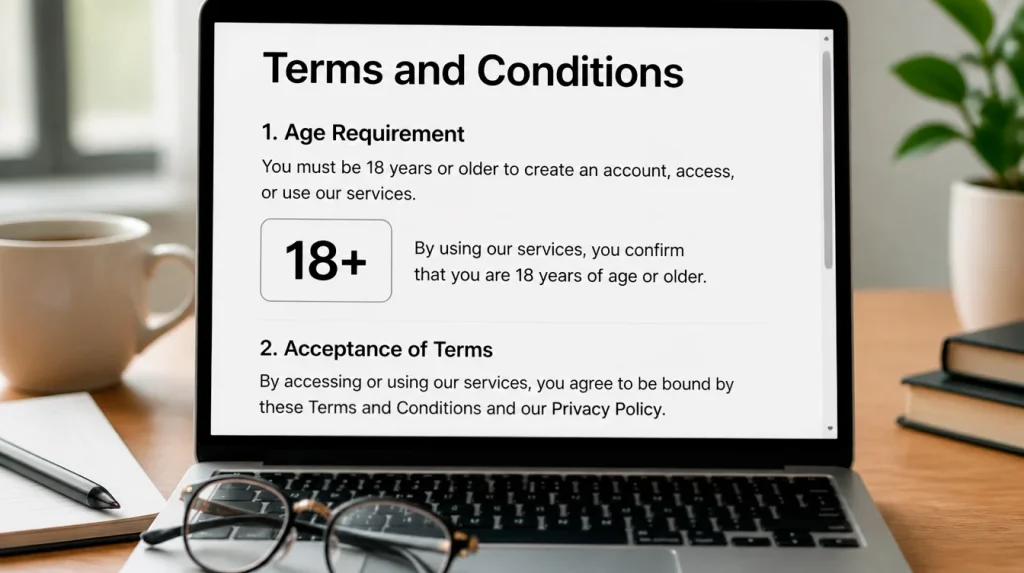
A smaller group of operators voluntarily set their minimum at 21+, even in states where 18 is the legal threshold. The motivation is risk management. By limiting their user base to 21+, these operators avoid the regulatory scrutiny that comes with serving the 18-to-20 cohort — a demographic that draws particular attention from lawmakers concerned about youth gambling exposure. The tradeoff is clear: a 21+ policy sacrifices a segment of potential players in exchange for reduced regulatory and reputational risk.
The operator’s stated minimum is the floor, not the ceiling. If a state requires 21+ for gambling or sweepstakes participation, the operator must enforce the state’s higher threshold regardless of its own policy. The terms of service typically include language stating that players must meet “the higher of our minimum age requirement or the minimum age required by applicable law.” That layered structure means the effective age requirement is always the more restrictive of the two.
State Laws That Override Operator Minimums
This is where the complexity lives. Most states do not have specific age requirements for sweepstakes casinos because most states have not passed legislation specifically addressing the sweepstakes casino model. In those states, the operator’s own 18+ or 21+ policy governs. But in states that classify sweepstakes casino activity as gambling or that have passed targeted sweepstakes legislation, state gambling age requirements apply.
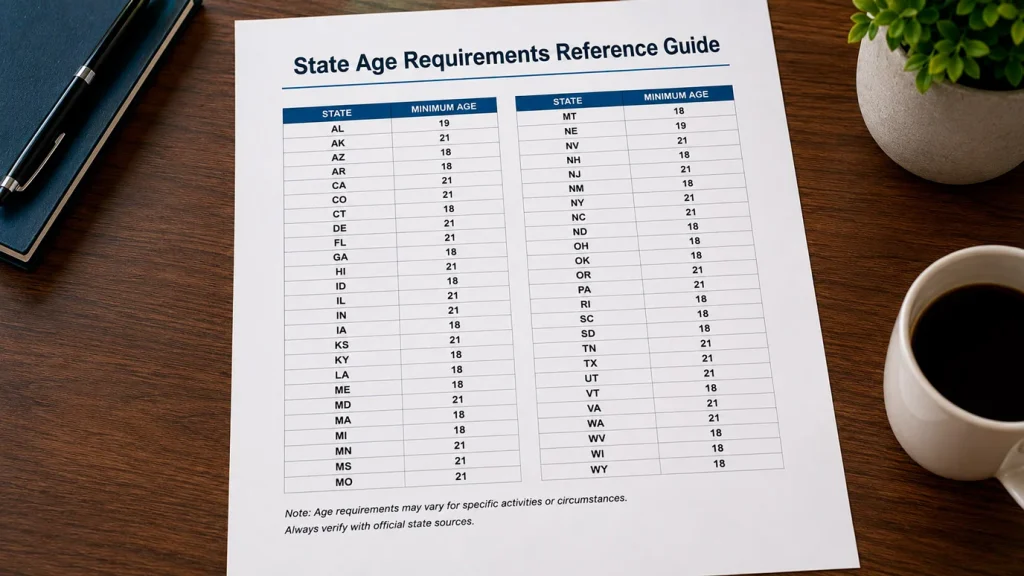
States with a 21+ gambling age effectively impose 21+ for sweepstakes casinos when the state’s regulatory framework treats sweepstakes platforms as gambling operations. This is significant because the 90% of sweepstakes casino players who consider the activity gambling — per AGA survey data — are functionally correct from a regulatory standpoint in these states, even if the operator markets itself as an entertainment platform rather than a gambling product.
The states that have banned sweepstakes casinos entirely — California, New York, New Jersey, Connecticut, Montana, Indiana, Maine, and others joining in 2026 — made the age question moot within their borders. Where sweepstakes casinos are banned, no age satisfies the legal requirement because the activity itself is prohibited. The age question only matters in the approximately 42 states plus the District of Columbia where sweepstakes casinos remain accessible.
State-level age enforcement also varies in rigor. Some states actively monitor sweepstakes casino compliance with age requirements as part of broader gambling oversight. Others have no enforcement mechanism specifically targeting sweepstakes platforms, relying instead on the operators’ own verification systems to prevent underage access. This inconsistency means that the theoretical age requirement and the practical enforcement of that requirement can differ significantly by jurisdiction.
How Age Is Verified During Registration
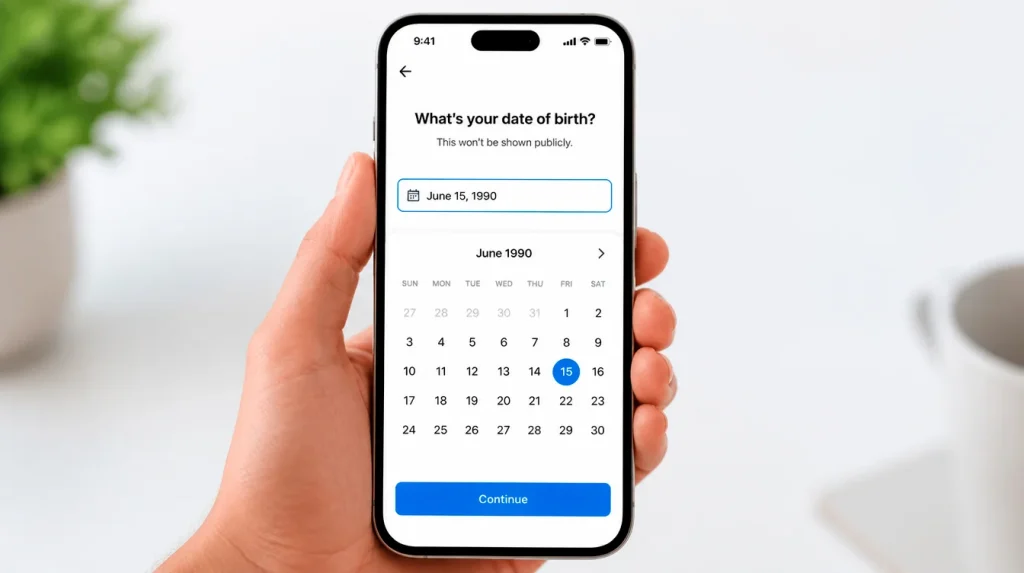
Sweepstakes casinos verify age through a multi-step process that begins at registration and intensifies at the first redemption attempt. The initial verification layer is self-declaration: you enter your date of birth during signup. This is the weakest layer — any 16-year-old can type a false birth year — but it establishes the legal foundation for the operator to claim good-faith compliance.

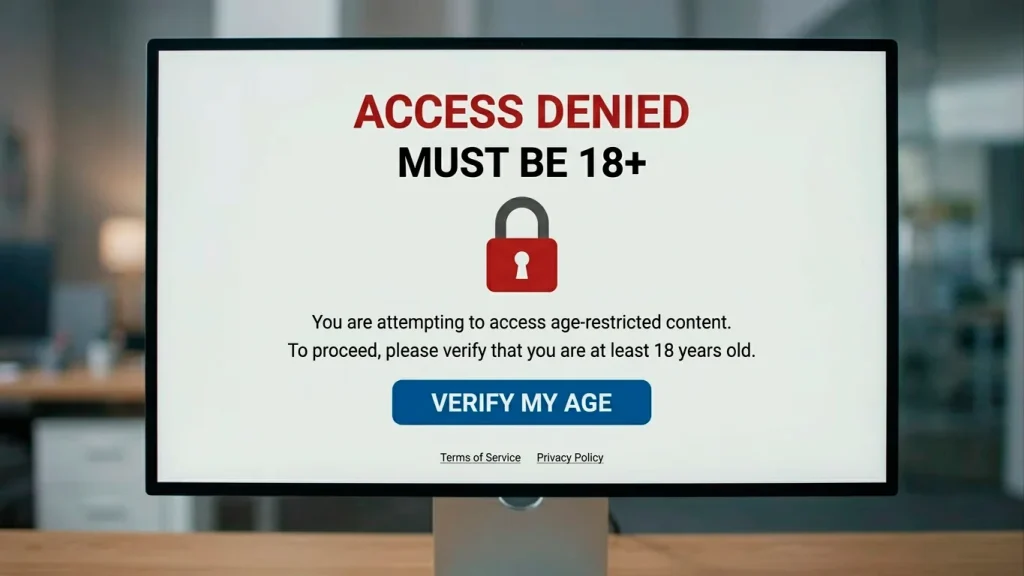
The second layer involves automated identity verification services. When you enter your name, date of birth, and address during registration, the platform runs this information against third-party databases to confirm that a real person of the stated age exists at the provided address. These databases aggregate public records, credit header data, and other identity sources to produce a confidence score. If the automated check fails or produces a low confidence score, the platform may require manual document submission before allowing the account to proceed.
The most rigorous verification happens at the KYC stage, typically triggered when a player attempts their first Sweeps Coin redemption. KYC requires government-issued photo identification — driver’s license, passport, or state ID — that confirms the player’s identity and date of birth. Some platforms also require a selfie for biometric matching against the ID photo. This step catches cases where an underage individual used an adult’s information during registration, because the photo ID must match the person actually operating the account. For a detailed walkthrough of the full verification process, the KYC verification guide covers what to expect and how to prepare.
The practical gap in age verification exists between account creation and first redemption. An underage player who passes the initial self-declaration and automated check can play in both GC and SC modes for days, weeks, or months before hitting the KYC wall at redemption. During that time, they can accumulate Gold Coins, earn Sweeps Coins, and fully experience the gambling-adjacent activity that age restrictions are meant to prevent. The verification catches them before they receive money, but it does not prevent the play activity itself.
This gap is a legitimate concern for responsible gaming advocates and a vulnerability that regulators have cited in support of stricter oversight or outright bans. Operators who implement proactive KYC at registration — rather than deferring it to the redemption stage — close this gap more effectively but at the cost of increased signup friction that reduces conversion rates. The tension between player protection and business metrics is real, and the industry has not resolved it uniformly.
Can 18-year-olds play sweepstakes casinos in every state?
No. While most sweepstakes casino operators set their minimum age at 18, state laws can override this to require a higher minimum — typically 21 — in jurisdictions that classify sweepstakes casino activity under their gambling regulations. Additionally, some operators voluntarily set their minimum at 21 regardless of state law. Players between 18 and 20 should verify both the specific platform"s age policy and their state"s applicable requirements before creating an account.
What happens if an underage player passes sweepstakes casino verification?
If an underage player bypasses the initial registration checks using false information, they can play until they attempt to redeem Sweeps Coins. At that point, KYC verification requires government-issued photo ID, which reveals the player"s true age. The account is typically suspended, any accumulated balance is forfeited, and the operator may report the incident depending on the jurisdiction. The gap between account creation and KYC verification represents a window where underage play can occur, which is why some operators have moved toward requiring identity verification at registration rather than deferring it to the redemption stage.
The full ranking is in our guide to the best US sweepstakes casinos.
Where each rule applies: the legal states map.
Articles
Prepared by the Best Sweepstakes Casinos US editorial staff.