
Sweepstakes Casino Legal States: Complete US Availability Map
 Available in US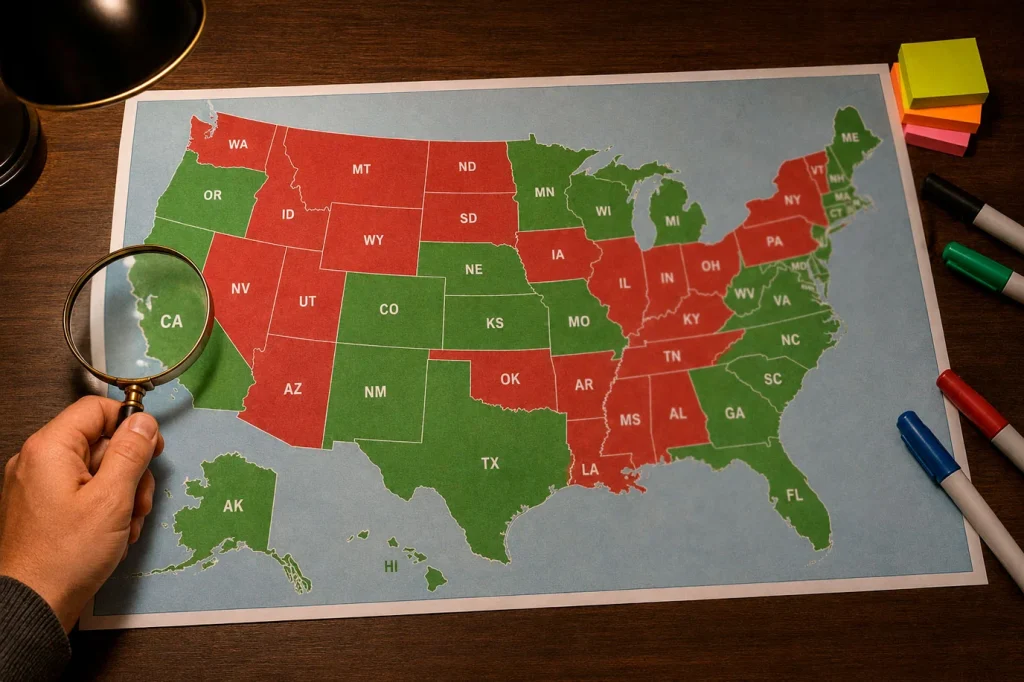
Two years ago, I could tell anyone who asked that sweepstakes casinos were available in 48 states plus D.C. — a simple, clean answer. Today, the map looks like it went through a paper shredder. Between October 2025 and mid-2026, the regulatory ground shifted faster than at any point in the model’s history, and the changes aren’t done yet.
As of early 2026, sweepstakes casinos are accessible to players in approximately 42 states plus the District of Columbia. That number has been shrinking, not growing, and the trajectory matters more than the snapshot. What was once a patchwork of two or three legacy holdout states (Washington, Idaho, and sometimes Nevada) has become an accelerating ban movement involving some of the country’s largest populations and gambling markets. California alone represented 17.3% of all sweepstakes casino purchases in the U.S. — and it banned them effective January 1, 2026.
This article is the detailed map I wish I’d had when state legislatures started moving. I track each ban by bill number, signing date, effective date, and penalty structure. I cover the states still considering action, the ones that voted no, and the economic consequences for operators who lost access to millions of players overnight. If your state is on any of these lists, or if you’re a player wondering what happens next, this is where to start.
Federal Sweepstakes Law and Why These Casinos Operate
Before diving into which states allow or ban sweepstakes casinos, you need to understand why they can operate in the first place — and that answer lives at the federal level, not the state level. There is no federal gambling license for sweepstakes casinos. There is no federal agency that regulates them. They exist in a space where federal law simply doesn’t classify them as gambling.
The logic rests on how U.S. law defines gambling versus sweepstakes. Gambling requires three elements: consideration (payment), chance, and prize. Remove any one of those three legs and the legal stool collapses. Sweepstakes casinos target the “consideration” leg — because Sweeps Coins are distributed for free (through AMOE, daily logins, social giveaways), the argument is that no consideration is required to play for prizes. The Gold Coin purchase is framed as a separate entertainment transaction, with SC arriving as a promotional bonus rather than a purchased product.
Jeff Duncan, the former U.S. Congressman who serves as Managing Director of the Social Gaming Leadership Alliance, has framed the industry’s position as follows: operators “are uniquely positioned to work with lawmakers, stakeholders and players to support innovation in digital games and ensure millions of Americans have the freedom to enjoy the games they love in a safe environment.” That framing — innovation, freedom, safety — is the industry’s preferred narrative. Whether individual states accept that narrative is an entirely different matter.
The federal void means each state decides independently how to treat sweepstakes casinos. Some states have gambling statutes broad enough to encompass the model already. Others have statutes so narrowly drafted that sweepstakes casinos fall clearly outside their scope. And a growing number are writing brand-new legislation specifically to address the category. The result is a legal landscape that changes state by state, session by session, and sometimes month by month.
States Where Sweepstakes Casinos Are Currently Available
When I run a geolocation check across the major sweepstakes platforms in 2026, roughly 42 states plus D.C. still show as accessible. The specific count fluctuates slightly depending on which operator you’re checking — some platforms voluntarily restrict access in states where others continue to operate — but the general picture is that a majority of the country remains available.
The largest remaining markets by player population include Texas, Florida, Pennsylvania, Ohio, and Illinois. These five states alone contain over 100 million adults, and none of them have active legislation targeting sweepstakes casinos as of mid-2026. For operators, these markets represent the core revenue base now that California and New York are gone. Florida is particularly notable because of its large retiree population and established gambling culture, while Texas matters because of its sheer size and the absence of any licensed iGaming or online casino alternative.

States where sweepstakes casinos have long been unavailable — predating the recent ban wave — include Washington and Idaho. Washington’s gambling statute has always been broadly written enough to capture the sweepstakes model, and operators have generally stayed out rather than test the legal waters. Nevada is a mixed case: the state’s powerful casino industry has historically pushed back against any unregulated competition, though some operators have maintained limited availability there.
A handful of states exist in a gray zone where legality is technically uncertain but enforcement hasn’t materialized. In these jurisdictions, operators assess risk individually — some serve the state, others don’t. This is why you’ll occasionally find that a platform available to your friend in one state isn’t available to you in another, even if neither state has passed an explicit ban. Operator-level risk tolerance varies, and legal opinions differ on borderline statutes.
The broader trend, though, is unmistakable. The “available” list is contracting. Every legislative session brings new bills in new states, and the momentum is toward restriction rather than expansion or regulation. For context on what exactly changes when a state flips from available to banned, I’ll cover the specific mechanics of each recent ban below — and for a deeper look at the entire ban timeline, the full ban tracker covers every detail.
The 2025-2026 Ban Wave: What Changed and Why
I’ve covered regulatory shifts in gaming for years, and I’ve never seen anything move as fast as the 2025-2026 ban wave. In the span of roughly eight months, six states enacted laws specifically targeting sweepstakes casinos, and at least one more (Washington) tightened its already-restrictive framework. The speed was remarkable — and the political dynamics behind it were surprisingly consistent across very different states.
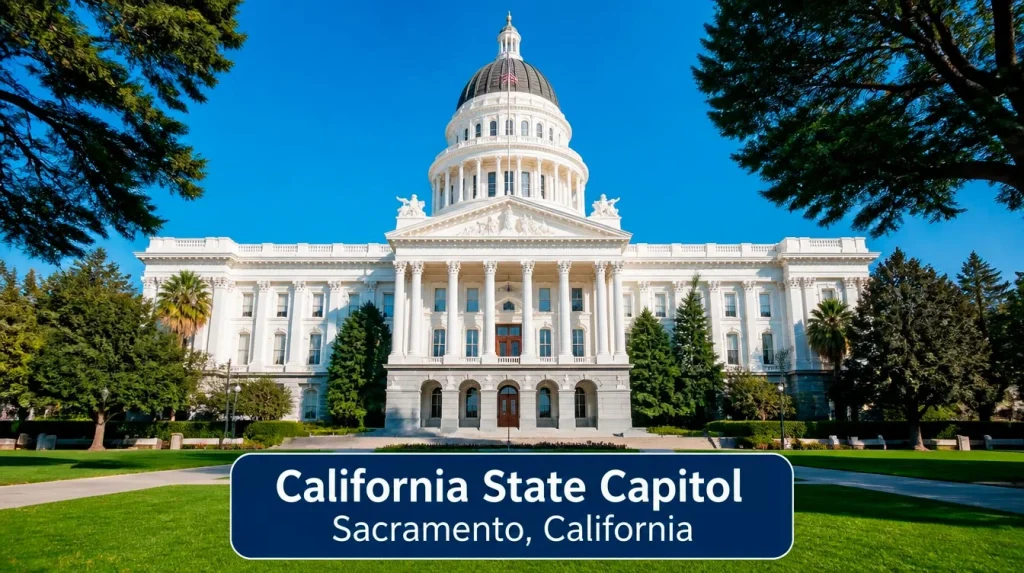
California struck first and hardest. Governor Newsom signed AB 831 on October 11, 2025, with an effective date of January 1, 2026. The significance of California can’t be overstated: the state accounted for 17.3% of all sweepstakes casino purchases in the United States, generating $2.42 billion in purchases in 2025 alone. Losing California was the equivalent of an airline losing its busiest hub overnight. The push came from a coalition of tribal gaming interests and cardroom operators who argued that sweepstakes casinos were siphoning revenue from regulated, tax-paying gambling operations — a pattern that would repeat in other states.
New York followed on December 5, 2025, with S 5935A. The New York law is notable for its aggressive penalty structure: fines ranging from $10,000 to $100,000 per violation, with liability extending beyond operators to include payment processors, geolocation vendors, and marketing affiliates. That last category — affiliates — sent shockwaves through the sweepstakes media ecosystem, because it meant that websites promoting sweepstakes casinos could theoretically face liability in New York.
New Jersey, Connecticut, and Montana enacted their own bans between the California and New York actions, each with varying penalty structures but similar motivations: protecting existing regulated gambling revenue, responding to constituent complaints about problem gambling, or both. Washington state, which had already restricted sweepstakes casinos under its existing gambling code, tightened enforcement provisions.
The counterpoint is equally important: six states considered sweepstakes casino bans in 2025 and declined to pass them. These rejections indicate that the ban movement, while powerful, is not unanimous. States with less established gambling industries, fewer tribal gaming compacts, and less organized opposition have been slower to act — or have actively decided that the sweepstakes model doesn’t warrant prohibition.
The most recent ban came from Maine, where Governor Mills signed LD 2007 on April 6, 2026, making Maine the ninth state with a direct legislative ban. That law takes effect around July 14, 2026. Indiana followed close behind with HB 1052, which passed the House 87-11 and establishes civil penalties up to $100,000 per violation, effective July 1, 2026. The SGLA’s Sean Ostrow responded that the Indiana bill “would criminalize law-abiding businesses while doing little to stop illegal operators who exploit consumers” — a framing the industry has consistently applied to every ban effort.
Pending Legislation: States That May Ban or Regulate Next
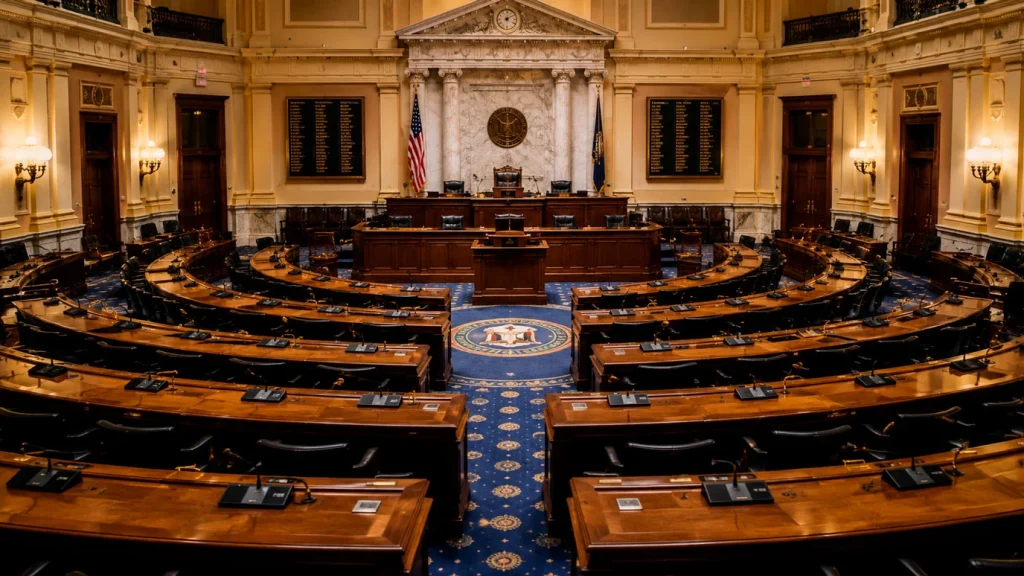
Predicting which state bans next is less about reading tea leaves and more about reading committee schedules. Seven states have active bills under consideration in 2026, and the legislative dynamics in each follow recognizable patterns — once you’ve watched a few ban bills move through committee, the process becomes familiar.
Tennessee is among the most advanced. The state’s attorney general issued approximately 40 cease-and-desist orders to sweepstakes operators on December 29, 2025 — an enforcement-first approach that preceded formal legislation. Nearly all operators complied within 30 days. Senate Bill 2136 subsequently passed the Tennessee Senate 32-0 in March 2026, signaling near-unanimous support. A 32-0 vote in any state legislature on any topic is unusual; on a gambling-adjacent topic, it’s almost unheard of. Tennessee appears likely to formalize a ban before the session ends.
Other states with pending or recently introduced legislation span a range of motivations and political dynamics. Some bills have bipartisan support driven by brick-and-mortar casino lobbying. Others emerge from attorney general offices concerned about consumer protection gaps. A smaller number reflect genuine policy analysis about whether the sweepstakes model constitutes gambling that should be regulated rather than banned outright.
The political coalitions driving bans are worth understanding because they reveal what kind of argument wins in each state. In states with strong tribal gaming compacts, tribal nations have been the primary advocates for bans — sweepstakes casinos represent unregulated, untaxed competition that diverts revenue from gaming operations that fund tribal services and pay state compact fees. In states without significant tribal gaming, the push tends to come from brick-and-mortar casino operators, state lottery commissions concerned about revenue erosion, or consumer protection advocates highlighting the absence of responsible gaming oversight. The AGA has been particularly active in framing the issue, noting that nearly half of all online casino advertising consumers encountered in early 2025 originated from offshore sweepstakes operators.
That last category — regulate rather than ban — is the road not yet taken. No state has created a regulatory framework specifically designed for sweepstakes casinos. Every legislative action so far has been binary: either allow the model under existing law or ban it. A regulation path would involve licensing requirements, gaming taxes, responsible gaming mandates, and ongoing compliance oversight — essentially treating sweepstakes casinos the way licensed online casinos are treated in New Jersey, Michigan, or Pennsylvania. The industry, through the SGLA, has signaled openness to regulation as an alternative to prohibition, but no state legislature has seriously pursued that option.
For players in states with pending legislation, the practical question is timing. Most ban bills include an effective date 60-180 days after the governor’s signature, giving operators and players a window to wind down activity. Monitoring your state legislature’s session calendar is the most reliable way to stay ahead of changes.
Economic Impact of State Bans on Operators
Numbers tell the story more clearly than any policy debate. When California closed its doors to sweepstakes casinos on January 1, 2026, operators lost access to a market generating $2.42 billion in annual purchases — 17.3% of total U.S. volume. New York’s ban removed the fourth-largest state by population. Combined with New Jersey, Connecticut, Montana, Maine, and Indiana, the banned states represent a significant share of the country’s addressable market.
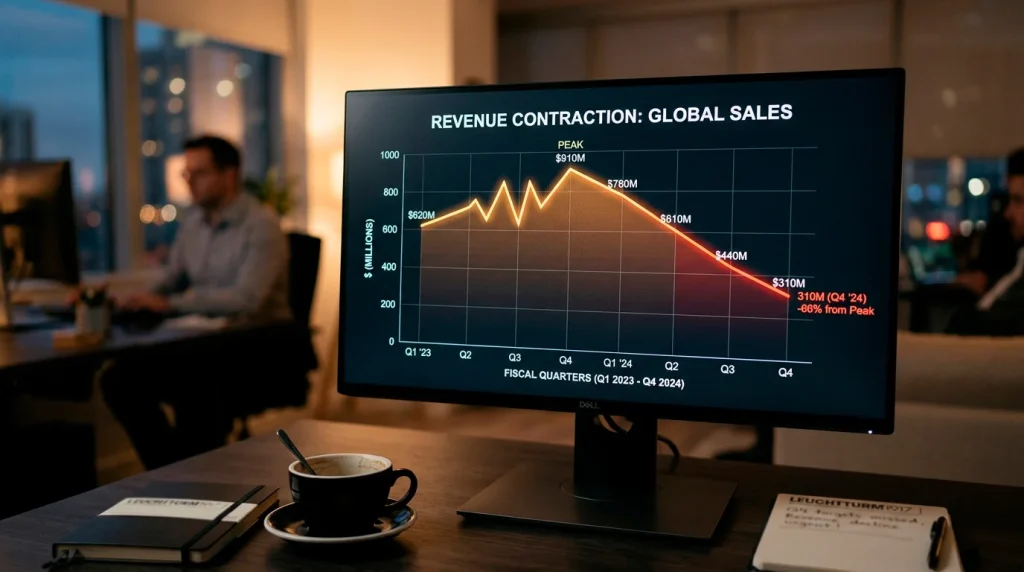
Eilers and Krejcik Gaming, the analytics firm whose sweepstakes data is the closest thing the industry has to an authoritative benchmark, responded to the ban wave by revising their 2026 forecast downward. Their base case projects net gaming revenue declining 10% to $3.6 billion. Their bull case — which assumes no additional state bans and continued growth in remaining markets — still projects only 14% growth to $4.55 billion. Neither scenario matches the 85% compound annual growth rate the industry sustained between 2019 and 2023.
The financial impact concentrates disproportionately on the largest operators. VGW’s own corporate disclosures acknowledge the risk directly: “To the degree that operations in the United States or Canada are impacted or challenged by regulators, VGW’s core business and ability to operate may be materially adversely impacted.” That’s corporate-speak for “this is an existential risk,” and it appeared in VGW’s annual report before the California ban even took effect. The company had already exited Canada on October 23, 2025, choosing to concentrate resources on the U.S. market — a market that is now materially smaller than when that decision was made.
For mid-tier and smaller operators, the economics are even more challenging. Launching a sweepstakes casino requires substantial upfront investment in technology, content licensing, payment processing, and marketing. If the addressable market shrinks by 20-30% within your first two years of operation — and over 30 new platforms launched between September 2025 and May 2026 — the unit economics deteriorate rapidly. I expect consolidation in 2026-2027 as smaller operators exit or merge, leaving fewer but larger players competing for a constrained market.
What a Ban Means for Your Account and Balance
What actually happens to your account when your state bans sweepstakes casinos? I get this question constantly, and the honest answer is: it depends on the operator, the law, and the timeline. Having tracked multiple state exits now, I can outline the general pattern — and flag where things go wrong.
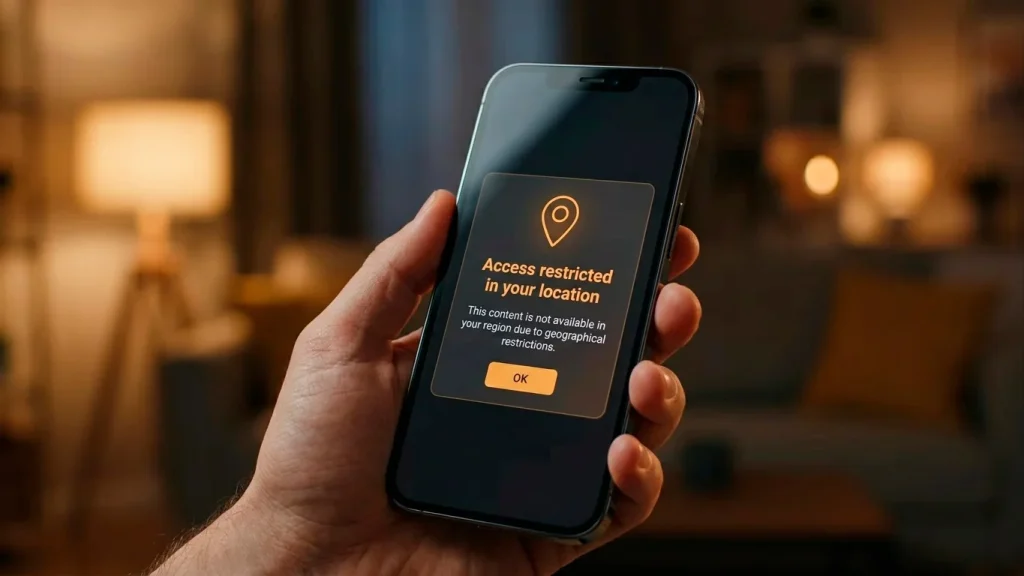
In the best case, operators provide advance notice — typically 30-60 days before the ban’s effective date — and give players time to redeem any Sweeps Coins above the minimum threshold. Players who have completed KYC verification can process redemptions normally during this window. Gold Coin balances, which have no cash value regardless of circumstances, are simply lost. Most operators’ terms of service explicitly state that GC are non-refundable and non-redeemable.
In less orderly exits, the timeline compresses and communication suffers. When VGW pulled out of the Canadian market on October 23, 2025, the transition was relatively smooth because it was a voluntary corporate decision with planning time. State bans, by contrast, can create legal ambiguity during the transition period — operators may restrict access immediately upon the governor’s signature rather than waiting for the formal effective date, erring on the side of legal caution. The New York ban, with its penalties reaching up to $100,000 per violation and liability extending to payment processors and geolocation vendors, created particularly strong incentives for operators to exit quickly rather than risk a compliance failure during the wind-down period.
SC balances below the minimum redemption threshold are the most vulnerable. If you have 40 SC in an account with a 50 SC minimum when your state bans take effect, those 40 SC are effectively stranded. You can’t redeem them, and you can’t earn more to reach the threshold. Some operators have offered one-time exceptions during state exits, lowering thresholds temporarily to allow players to cash out smaller balances. Others have not. There’s no legal requirement to do so.
Players who travel to non-banned states might technically be able to access their accounts while traveling — geolocation checks verify your physical location, not your home address. But using a banned-state home address for KYC while redeeming from another state creates compliance complications that most operators would rather avoid. Using a VPN to circumvent geolocation blocks violates every operator’s terms of service and can result in account closure and forfeiture of all balances.
Frequently Asked Questions
Can I play sweepstakes casinos while traveling to a banned state?
No. Sweepstakes casinos use geolocation technology to verify your physical location at the time of play, not your home address. If you"re physically located in a state where sweepstakes casinos are banned, you"ll be blocked from accessing the platform regardless of where your account was registered. Attempting to circumvent geolocation through VPNs or other tools violates operator terms of service and can result in account closure and loss of all balances.
Do state bans affect sweepstakes casino apps already installed?
Yes. A ban affects access, not installation. The app may remain on your phone, but when you open it, the geolocation check will detect that you"re in a banned state and block gameplay. Some operators remove their apps from state-specific app store listings after a ban takes effect, but even if the app stays installed, it won"t function for play or redemption while you"re physically in the banned jurisdiction.
Are any states considering legalizing and regulating sweepstakes casinos instead of banning them?
As of mid-2026, no state has advanced a regulatory framework specifically designed for sweepstakes casinos. Every legislative action so far has been binary: allow under existing law or ban. The sweepstakes industry, through the Social Gaming Leadership Alliance, has publicly expressed willingness to operate under regulation, but no state legislature has taken up the idea in a formal bill. A regulatory path would involve gaming licenses, tax obligations, responsible gaming mandates, and ongoing compliance oversight — similar to how states regulate iGaming — and would represent a significant departure from the current approach.
The full ranking is in our guide to the best US sweepstakes casinos.
The states that closed the door: the ban tracker.
Articles
Published by the Best Sweepstakes Casinos US team.