
Sweepstakes Casino Game Providers: Which Studios Supply the Games You Play
 Available in US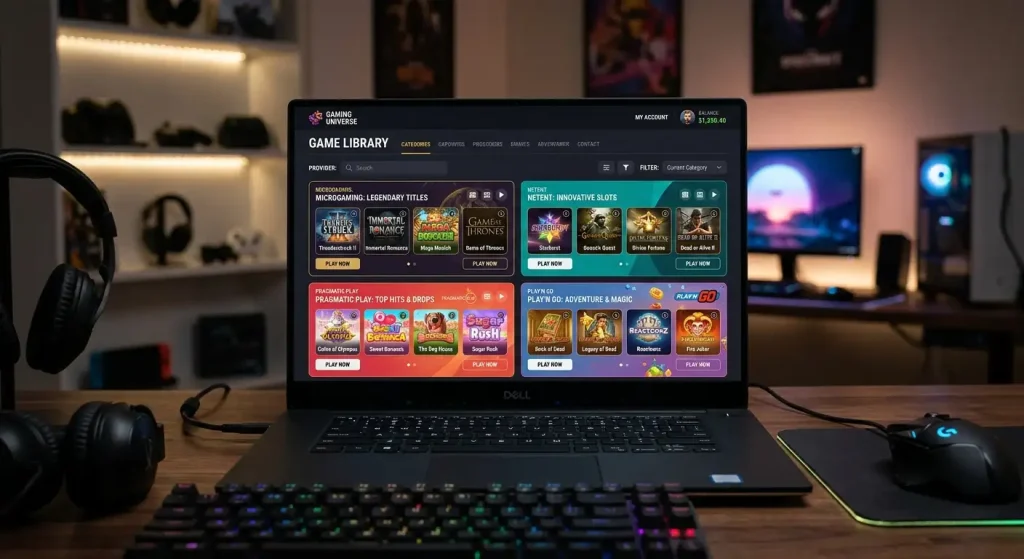
Pragmatic Play pulled its entire game catalog from US sweepstakes casinos in 2024, and overnight, dozens of platforms lost some of their most popular slots. Players logged in to find favorite titles replaced by unfamiliar games or simply gone. The provider exodus reshaped the sweepstakes casino landscape more than any single regulatory action or new platform launch, because it revealed how dependent most operators are on a handful of external studios for the content that keeps players engaged.
The sweepstakes casino software market reached an estimated $1.2 billion in 2025, projected to grow to $2.5 billion by 2033. That market is split between B2B game studios that develop content for multiple operators and in-house development teams that build proprietary games exclusively for their own platforms. Understanding which providers supply the games at your preferred platform matters because provider identity determines game quality, fairness verification, RTP reliability, and the risk that your favorite games disappear without warning.
Major Providers Active in the Sweepstakes Market
When I audit a new sweepstakes casino, the first thing I check after corporate registration is the game provider list. It tells me more about the platform’s quality ceiling and long-term viability than any marketing claim.

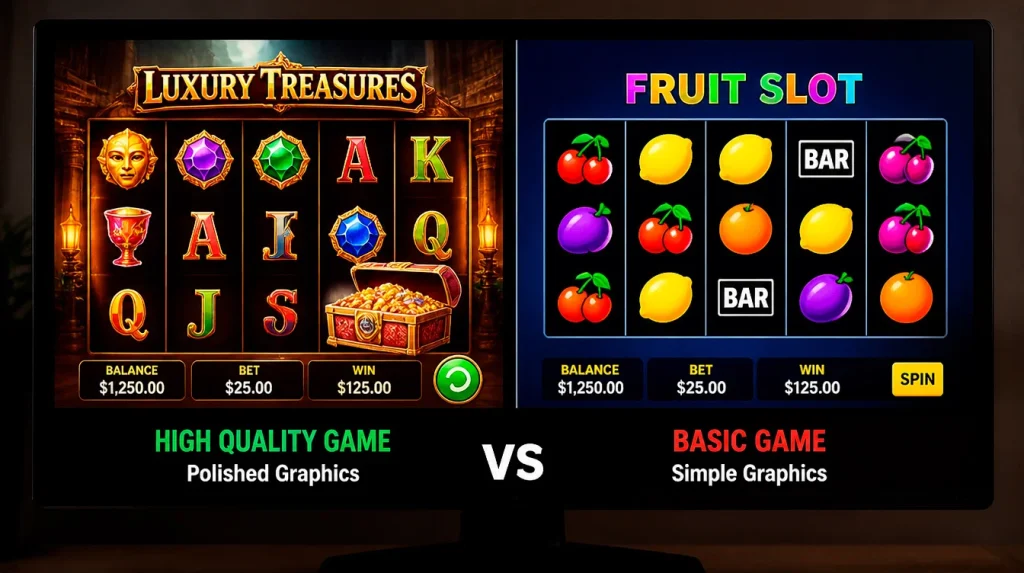
The providers still actively supplying US sweepstakes casinos in 2026 include a mix of established gaming studios and newer companies that have built their businesses specifically around the sweepstakes model. The established studios bring games that have been tested in regulated markets — their RTP models are verified, their RNG implementations are certified, and their game mechanics have been played by millions of players across multiple jurisdictions. When you play a title from one of these studios at a sweepstakes casino, the mathematical model is almost certainly identical to the regulated version.
The sweepstakes-native studios are a different category. These companies build games exclusively for the sweepstakes market, without the regulatory oversight that comes with supplying regulated casinos. Their games may be excellent — some produce creative, engaging titles with competitive RTPs. But the absence of external quality verification means you are trusting the studio’s internal standards rather than the compliance requirements of a gaming regulator. That distinction does not make the games bad, but it changes the risk profile.
In-house development is the third source. VGW operates its own game development studios, producing proprietary titles for Chumba Casino and its other platforms. These games are exclusive to VGW’s ecosystem and are not available at competing sweepstakes casinos. The advantage of in-house development is control — the operator owns the content and cannot lose it to a provider withdrawal. The disadvantage is opacity: without third-party distribution, there is no external benchmarking of the games’ mathematical models.
Providers Who Left and What It Means
Evolution’s CEO flagged the company’s position publicly, stating it would only supply content where there are no “regulatory or legal problems.” That statement, directed at the sweepstakes sector’s uncertain legal standing, signaled a strategic retreat from the US sweepstakes market by one of the world’s largest live casino and slot providers. Pragmatic Play’s withdrawal was even more decisive — a full catalog pullout that left operators scrambling for replacement content.


The departures share a common driver: reputational and regulatory risk. Providers who serve regulated markets in Europe, Asia, and the handful of US states with legal iGaming face licensing requirements that can be jeopardized by association with unregulated or legally contested platforms. A provider licensed by the UK Gambling Commission or the Malta Gaming Authority risks scrutiny if it simultaneously supplies games to US sweepstakes casinos facing class-action lawsuits and state bans. The calculus is straightforward — the regulated market revenue is worth more than the sweepstakes market revenue, so the sweepstakes business gets cut.
For players, a provider departure means three things. First, specific games you enjoyed may vanish from your platform. Second, the platform’s overall game library shrinks, reducing variety. Third, the replacement content may come from less established studios with fewer quality controls. Platforms that have diversified across multiple providers absorb departures better than platforms that concentrated their libraries around one or two studios.
How Provider Choice Affects Game Quality and Fairness
I tested the same game title across a regulated online casino and a sweepstakes casino that licensed it from the same provider. The gameplay was identical — same reels, same bonus mechanics, same visual presentation. Whether the RTP was also identical is harder to confirm, because the sweepstakes platform did not publish game-level RTP data while the regulated casino did. The regulated version ran at a disclosed 96.2%. The sweepstakes version provided no number at all.
This asymmetry defines the provider quality issue. Games from established providers are built to specific RTP models that are certified for regulated markets. When those same games appear at sweepstakes casinos, the RTP should theoretically match — providers do not typically customize RTP per distribution channel because it increases development costs without clear benefit. But “should theoretically” is weaker assurance than “must, by regulatory requirement,” and without mandatory disclosure, the theoretical alignment cannot be verified by players.
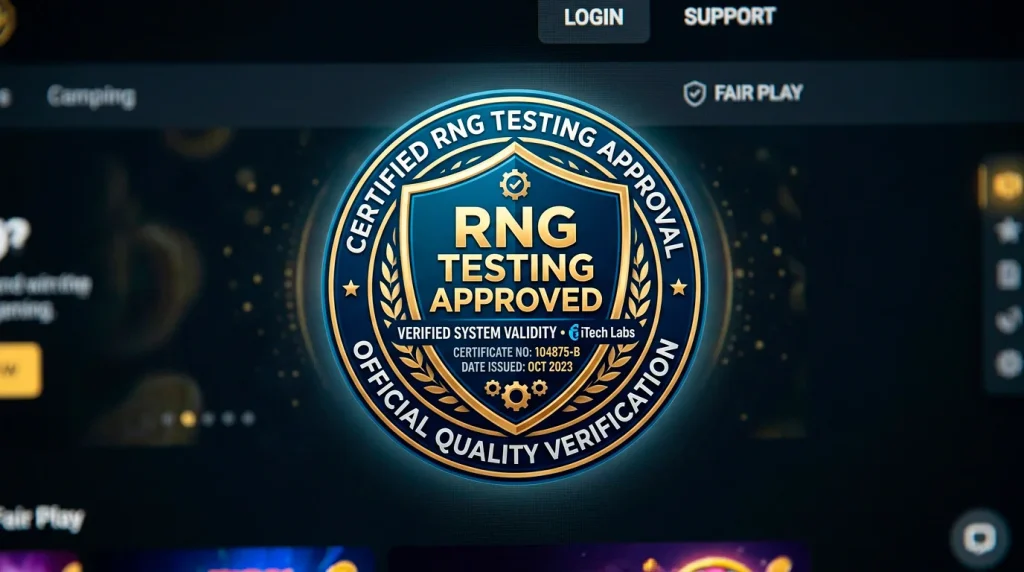
Games from sweepstakes-native studios or in-house teams have no external RTP benchmark at all. The RTP is whatever the developer built into the mathematical model, and there is no regulatory body auditing it. Some operators voluntarily engage testing laboratories — GLI, BMM, eCOGRA — to certify their RNG and RTP, and they publish those certifications. Others do not. The presence or absence of third-party certification from a recognized lab is the strongest signal of game fairness available to players in the absence of regulatory oversight.
What to Look for When Evaluating a Platform’s Game Library
Nine years in this space has taught me to evaluate game libraries through a lens that goes beyond title count. The number of games matters less than where they come from, whether the provider is identifiable, and whether any fairness verification exists.

Check the game information panel. Reputable platforms identify the provider for each game — a small logo or text credit that tells you which studio built the title. If no provider attribution exists, the games are either in-house (which the operator should state explicitly) or sourced from anonymous developers with no accountability trail. Anonymous games are not necessarily unfair, but they carry higher uncertainty.
Look for RTP disclosures. Platforms that publish game-level RTP data demonstrate transparency that directly benefits you as a player. Even if you never check the RTP of every game, the willingness to publish it indicates the operator has nothing to hide about their game mathematics. For a deeper analysis of RTP ranges across sweepstakes games, the RTP comparison covers published data and transparency gaps in detail.
Monitor library stability. If a platform’s game count drops noticeably between your visits, a provider may have withdrawn content. Library instability signals either contractual disputes, non-payment of licensing fees, or regulatory-driven departures — none of which reflect well on the operator’s business health. A stable or growing library suggests strong provider relationships and reliable business operations.
The provider landscape will continue evolving as the regulatory environment for sweepstakes casinos shifts. Operators who have invested in in-house development are insulated from provider withdrawals but may sacrifice game variety. Operators who rely entirely on third-party content are vulnerable to the next departure. The strongest position — and the best outcome for players — is a diversified approach that combines in-house titles with content from multiple identified providers, supported by voluntary RTP disclosure and third-party certification.
Why did Pragmatic Play leave the US sweepstakes market?
Pragmatic Play withdrew its game catalog from US sweepstakes casinos due to the sector"s uncertain legal standing. As a provider licensed in multiple regulated jurisdictions, Pragmatic Play faced potential regulatory risk from association with platforms operating outside traditional gambling licensing frameworks. The company determined that its regulated market business was more valuable than the sweepstakes revenue, and it exited to protect its licensing relationships in jurisdictions like the UK and Malta.
How can I tell which provider made a sweepstakes casino game?
Most reputable platforms display the provider"s logo or name in the game information panel, accessible by clicking an info or help icon within the game itself. Some platforms also identify providers on the game thumbnail in the lobby. If no provider attribution is visible anywhere, the game is either developed in-house by the operator or sourced from an anonymous studio. Platforms that identify their providers by name offer greater transparency and make it easier to evaluate game quality based on the studio"s track record.
The full ranking is in our guide to the best US sweepstakes casinos.
Where their slots are played: the best slot libraries.
Articles
Published by the Best Sweepstakes Casinos US team.