
How Do Sweepstakes Casinos Work? The Dual-Currency Model Explained
 Available in US
I spent the first three years of my career in iGaming regulation before the sweepstakes model even existed as a category worth tracking. When these platforms started popping up around 2018, the question I kept hearing from state gambling commissions was deceptively simple: “Is this gambling?” Nine years later, roughly 55 million Americans play sweepstakes casino games — and most of them still can’t explain how the model actually works under the hood.
That gap between popularity and understanding is exactly what makes this topic worth unpacking. Sweepstakes casinos occupy a legal and economic space that doesn’t map neatly onto traditional gambling or traditional sweepstakes. They borrow mechanics from both, wrap them in a dual-currency system, and operate in around 42 states without holding a single state gambling license. The model is elegant in its construction and controversial in its execution, but before you can form any opinion about it, you need to understand the machinery.
This article walks through every layer of that machinery — from the federal legal logic that makes these platforms possible, through the two-currency architecture that separates play from prizes, to the economics that generate billions of dollars in annual revenue. I’ve tested dozens of these platforms firsthand as part of my ongoing market analysis, and I’ll draw on that direct experience throughout. Whether you’re a player trying to understand where your money goes, a regulator assessing the model, or just someone who saw a Chumba Casino ad and wondered what on earth a “Sweeps Coin” is — this is the breakdown you need.
The Legal Framework Behind Sweepstakes Promotions
Here’s a fact that surprises almost everyone I work with in the regulatory space: the legal foundation for sweepstakes casinos isn’t new legislation — it’s century-old sweepstakes law. The same legal principles that let McDonald’s run its Monopoly game and Publishers Clearing House mail out prize envelopes are what these casino platforms rely on to operate.
Under U.S. federal law, a promotion qualifies as a sweepstakes rather than gambling if it meets three conditions. First, participants must be able to enter without making a purchase — the “no purchase necessary” requirement. Second, the prizes must be awarded through a mechanism that doesn’t constitute illegal gambling under state law. Third, the promotion must comply with specific disclosure and fairness standards. Sweepstakes casinos are structured specifically to satisfy these criteria, and the dual-currency system is the engineering that makes it work.
The key distinction is between consideration (something of value you pay) and the prize. In traditional gambling, you wager money and can win money — the consideration and the prize are directly linked. In the sweepstakes model, you purchase Gold Coins (a virtual entertainment product), and Sweeps Coins are provided as a free bonus alongside that purchase or through entirely free methods. The Sweeps Coins — not the Gold Coins — are what can be redeemed for prizes. This separation is what creates the legal argument that playing with Sweeps Coins isn’t gambling, because you never paid for them directly.
West Virginia state lawmaker Shawn Fluharty has been one of the most vocal critics of this framing, arguing that “redeemability to real money is the real issue. It is illegal gambling if it’s $30 in coins and it’s 30 coins.” His point cuts to the heart of the regulatory debate: does the dual-currency wrapper genuinely change the nature of the activity, or is it a legal fiction? An AGA survey of 2,250 players found that 90% of sweepstakes casino users consider the activity gambling, and 68% say their primary goal is winning money. The legal framework says sweepstakes; the player experience says something else entirely.

This tension is precisely why the regulatory landscape is shifting so fast. Multiple states have decided that the sweepstakes structure doesn’t change the substance of the activity, and they’ve moved to ban these platforms outright. Others continue to allow them, sometimes grudgingly, sometimes by simply not addressing them in existing statute. The legal framework is a starting point for understanding the model, not a final verdict on its legitimacy.
Gold Coins and Sweeps Coins: Two Currencies, Two Purposes
The first time I logged into a sweepstakes casino for professional analysis, I stared at my account balance for a solid minute. Two separate numbers, two separate currencies, two separate icons. It felt like opening a bank account in a country with a monetary system you’ve never encountered. That confusion is almost universal among new players, and it’s by design — the two currencies serve fundamentally different functions, and conflating them is both the most common player mistake and the legal distinction that holds the entire model together.
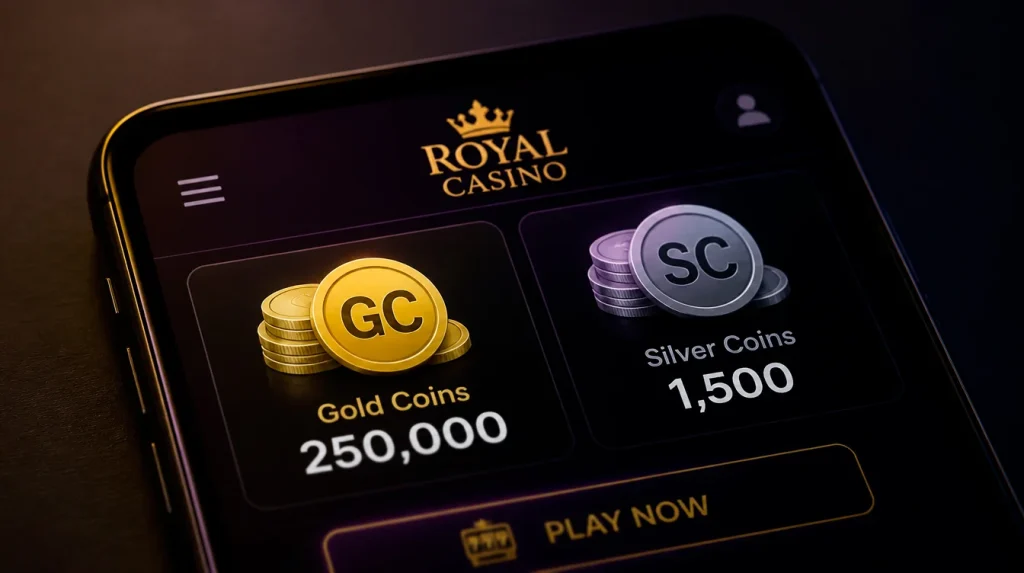
Gold Coins are the entertainment currency. You buy them, you play with them, and that’s where their journey ends. GC cannot be redeemed, withdrawn, or converted into anything of real-world value. Think of them like tokens at an arcade — you feed in cash, you get tokens, you play games, and when you’re done, the tokens are gone. Gold Coin balances can reach impressive-sounding numbers (packages often include hundreds of thousands of GC), but those numbers are entertainment value only. When you buy a Gold Coin package, that purchase is functionally identical — from a legal perspective — to buying a virtual item in a mobile game. You’re paying for digital entertainment.
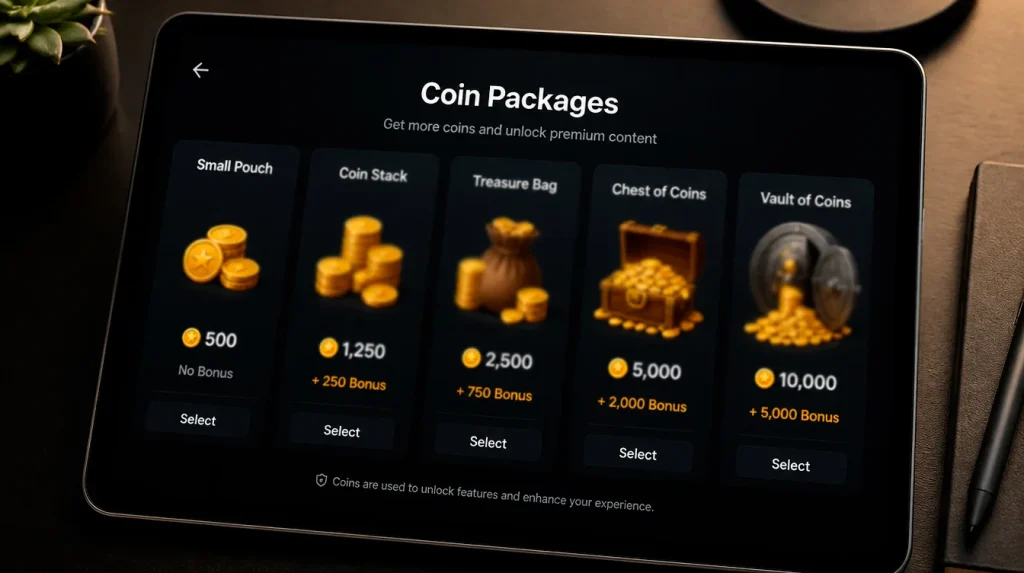
Sweeps Coins are the prize currency, and they work on an entirely different set of rules. You cannot buy SC directly. Instead, SC arrive through free channels: as a bonus attached to Gold Coin purchases, through daily login rewards, via social media promotions, through mail-in requests (the “alternate method of entry” or AMOE), and sometimes through referral programs. Once you accumulate SC, you can use them to play the same games available in Gold Coin mode. Winnings from SC gameplay are credited as more SC. And here’s where the real difference lives — SC can be redeemed for cash prizes or gift cards once you meet the platform’s minimum threshold and playthrough requirements.
The standard exchange rate across the industry is 1 SC = $1 USD. That uniformity isn’t accidental — it simplifies the redemption process and makes the value proposition transparent for players. Minimum redemption thresholds vary by operator, typically ranging from 25 SC to 100 SC, but the conversion rate itself is remarkably consistent. When a platform advertises “get 2 SC free with your Gold Coin purchase,” what they’re functionally saying is “get $2 in potential prize value as a bonus.”
The separation between these currencies isn’t cosmetic. It’s the load-bearing wall of the entire legal structure. If a platform allowed players to buy SC directly, the argument that SC redemptions are “sweepstakes prizes” rather than “gambling winnings” would collapse. Every compliant operator maintains a strict firewall: GC is purchased, SC is earned for free — and the fact that SC happens to arrive alongside a GC purchase is framed as a promotional bonus, not a transaction.
How Gold Coin Purchases Fund the Model
Follow the money. That’s always my starting point when analyzing any gaming business model, and with sweepstakes casinos, the money enters through Gold Coin purchases. In 2024, the sweepstakes casino industry generated $10.6 billion in Gold Coin purchases. That number climbed to an estimated $11-14.3 billion in 2025. To put that in perspective, the entire U.S. movie theater box office brought in roughly $8.7 billion in 2024. Americans spent more buying virtual coins at sweepstakes casinos than they spent on movie tickets.
Gold Coin packages are typically structured as tiered offerings. A platform might sell packages at $4.99, $9.99, $19.99, $49.99, and $99.99 — sometimes higher. Each package includes a set quantity of Gold Coins and, critically, a set quantity of “bonus” Sweeps Coins. The first-purchase package often carries an inflated bonus (more GC and SC per dollar than subsequent purchases), functioning as a loss leader to acquire new customers.
Payment methods for GC purchases vary by platform but generally include credit and debit cards, ACH bank transfers, PayPal, Apple Pay, Google Pay, and increasingly, cryptocurrency. The payment processing side of this business is more complicated than it appears on the surface. Because sweepstakes casinos are not classified as gambling under federal law (at least by their own legal interpretation), they can use standard payment processors rather than the specialized gambling payment rails required by licensed online casinos. This is a significant cost advantage — gambling payment processing carries higher fees, stricter compliance requirements, and more frequent declines from issuing banks.
However, this advantage has been eroding. Some banks have started flagging sweepstakes casino transactions and declining them, particularly after Google reclassified sweepstakes casinos from “social casino games” to gambling products in its advertising policy in October 2025. Payment friction is one of the underreported headwinds facing the industry — when a player’s credit card gets declined, the purchase doesn’t happen, and neither does the associated SC bonus that drives engagement.
Ways to Earn Sweeps Coins Without Buying
If Gold Coin purchases are the engine, free Sweeps Coins are the fuel that keeps players returning between purchases. And for the sweepstakes legal model to hold up, these free earning methods can’t be an afterthought — they must be genuine, accessible, and available to anyone regardless of whether they’ve ever spent a dollar on the platform.
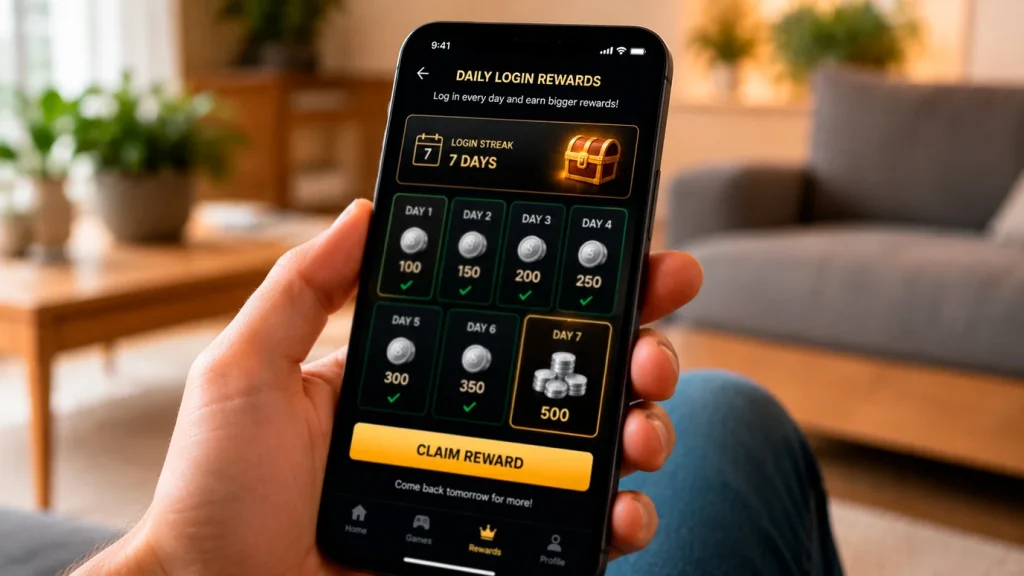
The most common free SC channel is the daily login bonus. Most platforms credit a small amount of SC (typically 0.3-1 SC) simply for logging in each day. Some platforms chain these into streaks — log in five consecutive days and receive a larger bonus on the fifth day. It’s a mechanic borrowed directly from mobile gaming, and it works. Players who log in daily develop habitual engagement patterns that increase the likelihood of eventual GC purchases, even though the daily SC itself costs the operator almost nothing to distribute.
Social media giveaways represent another significant SC distribution channel. Operators run contests on Facebook, Instagram, X, and TikTok, giving away SC to followers who engage with posts. These promotions serve a dual purpose: they distribute free SC (satisfying the sweepstakes model’s legal requirement for free entry) while simultaneously functioning as customer acquisition marketing. Over half of players aged 18-34 value social features more than bonuses or game variety, which explains why operators invest heavily in community-building channels that double as SC distribution pipelines.
Then there’s AMOE — the alternate method of entry that most players have heard of and almost nobody uses. Federal sweepstakes law requires that participants be able to enter without purchasing anything, and the mail-in request is how platforms satisfy this requirement. You write a physical letter to the operator requesting free SC, mail it to their designated address, and receive SC credited to your account within a few weeks. The process is deliberately analog and slow, which is why engagement rates are negligible. But its existence is legally essential — it’s the mechanism that lets operators argue “no purchase is necessary to receive Sweeps Coins and play for prizes.”
Referral programs round out the free SC ecosystem. Invite a friend, and when they register (and sometimes when they make their first purchase), both of you receive bonus SC. The amounts vary, but the structure is standard across most platforms. Taken together, these free channels create a real pathway to playing SC games and eventually redeeming prizes without ever spending money — though the practical reality is that the amounts are small enough that most players who engage seriously with SC games end up making at least one GC purchase.
From Sweeps Coins to Real Cash: The Redemption Process
I’ve processed redemptions on over 30 platforms as part of my testing work, and the experience varies far more than most comparison sites acknowledge. The basic flow is consistent: accumulate SC through gameplay, meet the minimum threshold, complete identity verification, choose a payout method, and wait. But each of those steps has friction points that can range from seamless to genuinely frustrating.
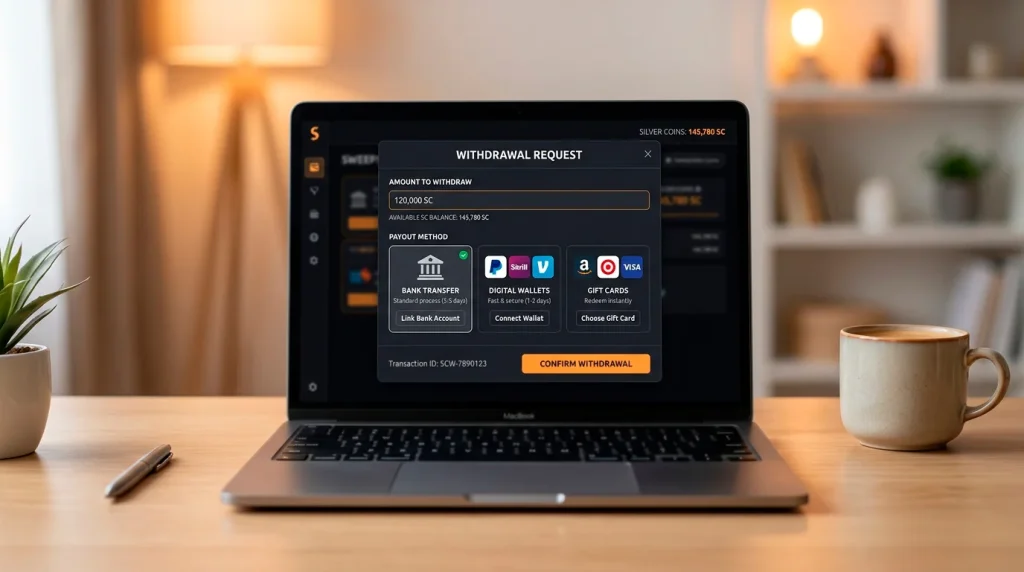
The minimum redemption threshold is your first gate. Industry-wide, these range from as low as 10 SC at some smaller operators to 100 SC at established platforms. At the standard 1 SC = $1 rate, that means you need between $10 and $100 worth of SC in your account before you can cash out anything. For a player who earned their SC entirely through free methods, reaching even a 50 SC threshold can take weeks or months of daily logins and careful gameplay. For someone who bought a GC package with bonus SC, the math is obviously faster — but playthrough requirements mean you typically need to wager your SC a certain number of times before they become eligible for redemption.
Identity verification (KYC) is the step that catches most first-time redeemers off guard. Before processing any payout, operators require proof of identity — government-issued photo ID, proof of address, and sometimes a Social Security Number. This verification is a one-time process, but it can add 24-72 hours to your first redemption while the compliance team reviews documents. I’ve seen verifications clear in four hours; I’ve also seen them take a full week when document quality was poor or information didn’t match.
Once verified, you choose your method. Payout options at sweepstakes casinos generally include ACH bank transfers (48-72 hours median processing), gift cards (often same-day to 24 hours), PayPal (4-24 hours), and cryptocurrency (variable, but often faster than ACH). The scale of these payouts is substantial — VGW, the company behind Chumba Casino and several other platforms, paid out $2.83 billion in sweepstakes prizes in its 2023-24 fiscal year, up from $2.2 billion the year prior.
The redemption process is where the sweepstakes model’s most practical tension lives. The legal framework says “you’re receiving a sweepstakes prize.” The operational reality — KYC verification, playthrough requirements, processing times, minimum thresholds — looks and feels exactly like a gambling withdrawal. That experiential overlap is one of the core arguments made in the dozens of class-action lawsuits currently pending against operators.
How Operators Make Money: Revenue and Payout Ratios
Strip away the legal wrappers and the dual-currency architecture, and the economic engine of a sweepstakes casino looks remarkably similar to a traditional online casino. Revenue comes in through purchases (GC packages). A portion goes back out as prizes (SC redemptions). The difference between the two is net gaming revenue — and that number has been growing at a pace that has traditional gambling operators paying very close attention.
The industry generated an estimated $3.4 billion in net gaming revenue in 2024, up from roughly $1.9 billion in 2023. That near-doubling happened while the payout ratio — the percentage of purchases returned to players as prizes — remained stable at 68-72%. In practical terms, for every dollar players spent on Gold Coin packages, operators returned 68 to 72 cents in the form of redeemable Sweeps Coin prizes, keeping 28 to 32 cents as net revenue. That retention rate is comparable to what regulated online casinos achieve, which is one of the data points critics use to argue the models are economically identical.
The dominant player in this market is VGW Holdings, the Australian company behind Chumba Casino, LuckyLand Slots, and Global Poker. VGW’s financial filings with ASIC (Australia’s corporate regulator) reveal a company operating at a scale that dwarfs most of its competitors combined. In fiscal year 2025, VGW generated A$7.3 billion ($5.2 billion USD) in total revenue, a 19% year-over-year increase. Chumba Casino alone accounted for A$5.2 billion ($3.7 billion USD) of that total. The company’s profit rose 33.5% to A$656 million, and it held approximately A$1 billion in cash reserves by year-end.

Those numbers are worth sitting with for a moment. A single sweepstakes casino — Chumba — generated more revenue in one year than many publicly traded U.S. gambling companies generate across all their properties. And VGW accomplished this without holding gambling licenses, without being subject to gaming commission audits, and without the tax obligations that licensed operators bear. The cost structure advantage is significant: licensed online casinos in states like New Jersey and Michigan pay gaming taxes ranging from 15% to over 50% of gross gaming revenue. Sweepstakes casinos pay standard corporate income taxes on profits, but no gaming-specific levies.
The growth trajectory, however, is no longer a straight line upward. Eilers and Krejcik Gaming revised their 2025 net revenue forecast downward from $4.7 billion to $4 billion — growth of 16% instead of the 36% previously expected. Their 2026 base case projects a 10% decline to $3.6 billion, driven primarily by the loss of California (which represented 17.3% of all U.S. sweepstakes purchases) and New York. A more optimistic scenario still sees 14% growth to $4.55 billion, but the era of unchecked expansion is clearly over. State bans, payment processing challenges, provider withdrawals, and regulatory reclassification are all compressing the growth curve that defined the industry’s first five years of explosive scale.
Frequently Asked Questions
Is a sweepstakes casino the same as online gambling?
Legally, no — sweepstakes casinos operate under federal and state sweepstakes law rather than gambling statutes. Functionally, the experience shares significant overlap with online gambling: you play casino-style games, you can win real money through SC redemption, and payout ratios mirror those of licensed online casinos. An AGA survey found that 90% of sweepstakes casino players consider the activity gambling regardless of its legal classification. The distinction matters for regulation and taxation, but the player experience is closer to gambling than the legal framework suggests.
Why do sweepstakes casinos give away free Sweeps Coins?
Free SC distribution is a legal requirement, not generosity. Under U.S. sweepstakes law, participants must be able to enter without making a purchase. Free SC through daily logins, social media giveaways, mail-in AMOE requests, and sign-up bonuses satisfy this "no purchase necessary" condition. Without these free entry methods, the entire sweepstakes legal argument collapses, and the operation would be reclassified as unlicensed gambling. Operators also benefit commercially from free SC — it drives engagement, builds habits, and increases the likelihood of eventual Gold Coin purchases.
How much revenue do sweepstakes casinos generate from Gold Coin sales?
The industry generated $10.6 billion in Gold Coin purchases in 2024, with estimates for 2025 ranging from $11 billion to $14.3 billion. After paying out prizes (at a rate of approximately 68-72% of purchases), net gaming revenue reached roughly $3.4 billion in 2024. VGW Holdings alone — operator of Chumba Casino, LuckyLand, and Global Poker — reported $5.2 billion USD in total revenue for its 2025 fiscal year.
What happens to my Gold Coins if the casino shuts down?
Gold Coins have no cash value and cannot be redeemed, so if a platform closes, your GC balance is lost — similar to losing arcade tokens when an arcade shuts its doors. Some operators include terms of service provisions that disclaim liability for GC balances in the event of closure. Sweeps Coins present a different situation: if you have SC above the minimum redemption threshold and have completed KYC verification, you may be able to redeem before shutdown. However, if a platform exits a market suddenly (as VGW did when leaving Canada in October 2025), players in affected regions may lose access to unredeemed SC balances.
The full ranking is in our guide to the best US sweepstakes casinos.
The two currencies in detail: Gold Coins vs Sweeps Coins.
Recommend
Prepared by the Best Sweepstakes Casinos US editorial staff.