
Sweepstakes Casino RTP: How Return-to-Player Rates Compare
 Available in US
I asked a sweepstakes casino’s customer support team a simple question: “What is the RTP of your most popular slot?” The response took four days and said, in essence, “We cannot disclose that information.” That exchange captures the transparency problem in this sector better than any statistic I could cite. In regulated online gambling, RTP disclosure is mandatory. In sweepstakes casinos, it is voluntary — and most operators volunteer nothing.
Return-to-player is the single most important metric for evaluating whether a game is structured fairly. It represents the theoretical percentage of all wagered money that a game returns to players over time. A 96% RTP means that for every $100 wagered in aggregate, the game is designed to return $96 and keep $4. With 50 to 60 active sweepstakes casino operators in the US market, the range of RTP practices — from transparent publishing to complete opacity — spans the entire spectrum.
What RTP Means and Why It Matters at Sweepstakes Casinos
Before I ran my first sweepstakes casino payout test, I spent weeks building a framework for evaluating game fairness. RTP is the starting point, but it is frequently misunderstood by players who treat it as a guarantee rather than a statistical average.
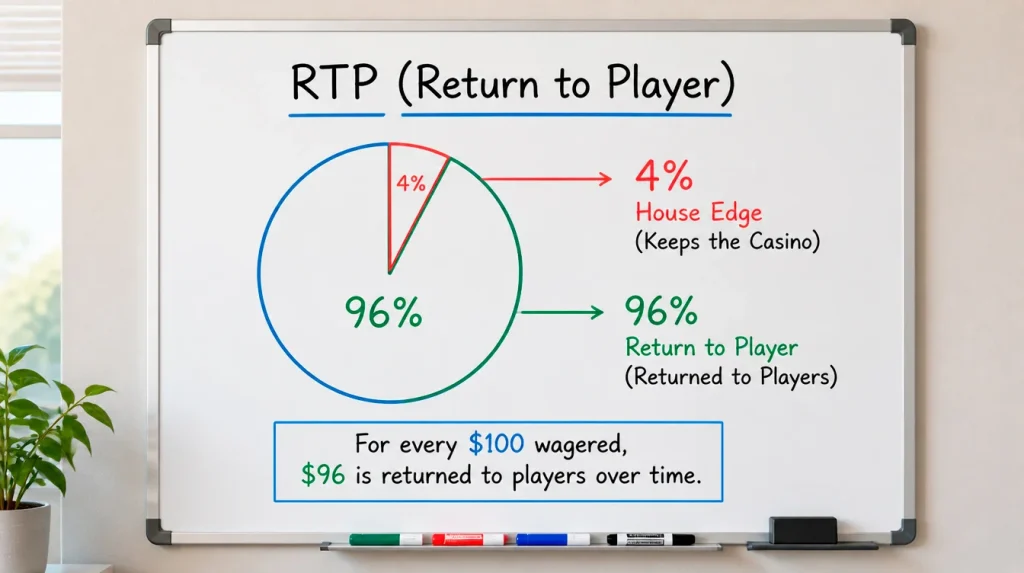
A 96% RTP does not mean you will get back $96 for every $100 you wager. It means that across millions of spins by all players combined, the game’s mathematical model produces a 96% return rate. Your individual session could see you double your balance or lose everything — both outcomes are consistent with a 96% RTP. The percentage describes the game’s long-run behavior, not any single player’s short-term experience.
What RTP does tell you is whether the game is within the range of acceptable fairness. Regulated online slots typically run between 94% and 98% RTP. Land-based slots in most US states operate between 85% and 95%. A sweepstakes casino game running at 90% RTP is mathematically taking twice as much from players as a 95% RTP game — over time, that difference is substantial. If you wager 1,000 SC at 95% RTP, your expected loss is 50 SC. At 90% RTP, your expected loss is 100 SC. Same amount wagered, twice the cost.
The problem at sweepstakes casinos is that without published RTP data, you cannot make this calculation. You are wagering Sweeps Coins — redeemable at $1 each — on games whose mathematical structure may or may not align with industry norms. That is a fundamentally different risk profile than playing at a regulated casino where RTP is audited and disclosed.
Published RTP Data for Popular Sweepstakes Games
The small number of sweepstakes casinos that do publish RTP data provides a useful benchmark for evaluating the sector. Scratch Silver carries a published RTP of 96%, which places it squarely in the range of typical regulated online slots. Bass Boss Megaways publishes at 95.68%, slightly below the 96% mark but still competitive with industry norms.
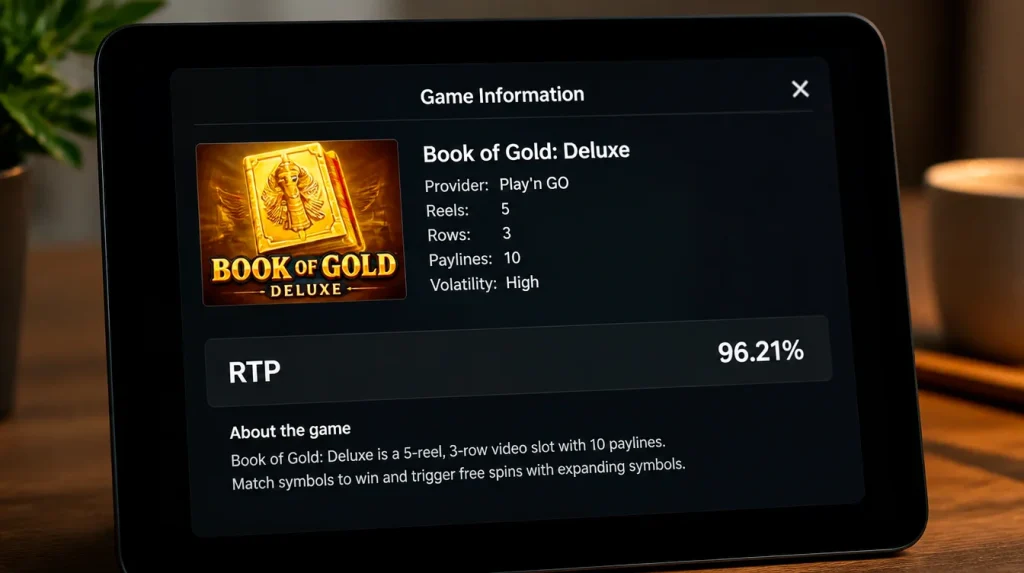
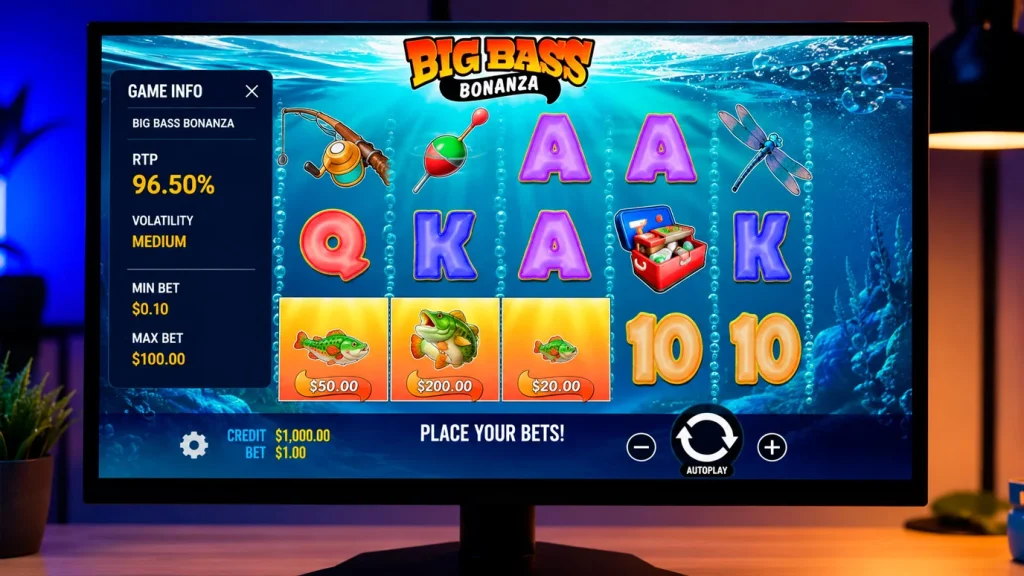
These figures come from platforms that have made a deliberate decision to differentiate on transparency. They publish game-level RTP data in their help centers or game information panels, allowing players to compare games before wagering. The RTPs I have verified through these disclosures generally fall between 94% and 97%, consistent with what established game providers deliver to regulated markets.
The games that carry published RTPs are predominantly from recognized third-party studios rather than anonymous in-house development teams. This makes sense: studios that supply games to both regulated and sweepstakes markets maintain the same mathematical models across both, because redesigning the RTP for different distribution channels would be more expensive than simply deploying the same game. When you see a known studio’s title at a sweepstakes casino, the RTP is likely identical to the regulated version of that game — though “likely” is doing meaningful work in that sentence, because without mandatory auditing, there is no guarantee.
Transparency Gaps: Who Publishes RTP and Who Does Not
VGW acknowledged the stakes of the transparency question in its corporate disclosures, noting that “to the degree that operations in the United States or Canada are impacted or challenged by regulators, VGW’s core business and ability to operate may be materially adversely impacted.” That acknowledgment of regulatory risk connects directly to the RTP transparency issue: operators who do not disclose RTP data are also not subject to the auditing requirements that verify those numbers independently.
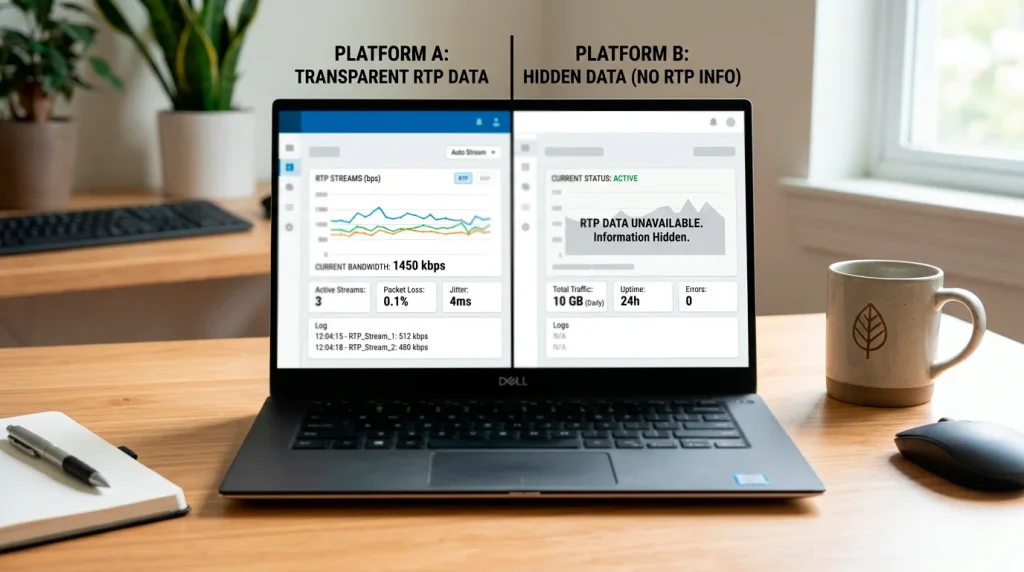
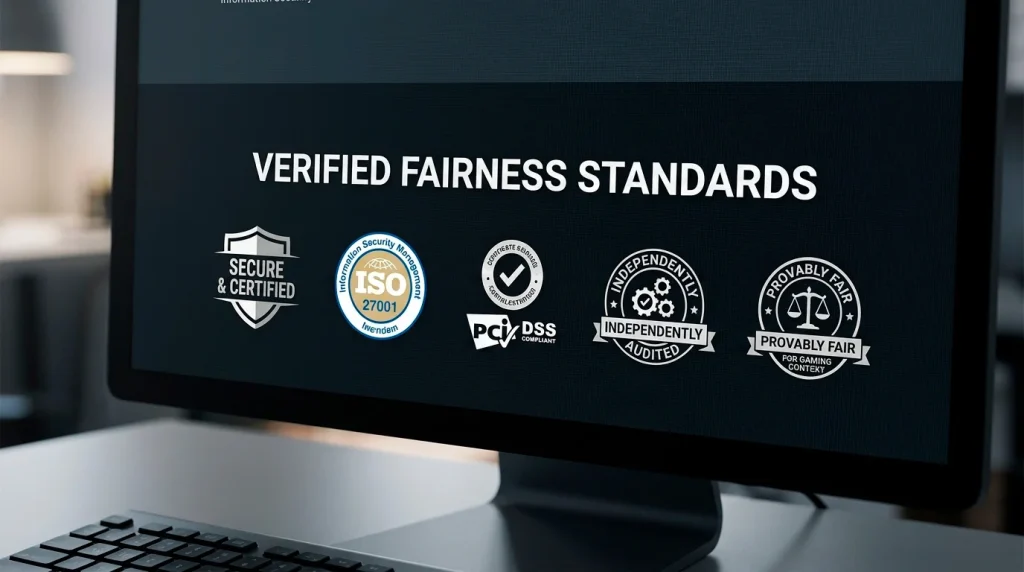
The transparency gap breaks down roughly into three tiers. The most transparent operators publish game-level RTP data, identify their game providers by name, and in some cases reference third-party RNG testing or certification. The middle tier provides general statements about fairness — “our games use certified random number generators” — without publishing specific RTP figures or identifying the certification body. The least transparent tier says nothing about RTP, does not identify game providers, and offers no evidence of independent testing.
For players, the practical implication is risk assessment. Playing at a platform with published RTPs from identifiable providers gives you enough information to make informed decisions about which games to play and how much house edge you are accepting. Playing at a platform with zero transparency means you are trusting the operator’s integrity without any verifiable data. That trust may be well-placed, but it is trust rather than evidence.
The gap also affects the industry’s credibility with regulators. Legislators considering sweepstakes casino bans frequently cite the absence of oversight mechanisms — including RTP auditing — as justification for restrictive legislation. Operators who voluntarily publish RTP data and submit to independent testing strengthen the industry’s argument for self-regulation, while those who maintain opacity give regulators ammunition for bans. The safety verification guide covers how to assess a platform’s overall legitimacy, including how to evaluate their fairness disclosures alongside other trust signals.
The sector is at a crossroads on this issue. As more states consider bans and more players demand accountability, the operators who embraced transparency early will be better positioned than those who treated RTP as a proprietary secret. Players who care about fairness should factor RTP transparency into their platform selection alongside bonuses, game variety, and payout speed — because a generous bonus on a game with an undisclosed 88% RTP is worse value than a modest bonus on a verified 96% RTP game, even if the headline numbers suggest otherwise.
Are sweepstakes casino games rigged?
There is no broad evidence that sweepstakes casino games from established providers are rigged. Games supplied by recognized studios use the same mathematical models deployed in regulated markets, with RTPs typically between 94% and 97%. However, the absence of mandatory RTP auditing in the sweepstakes sector means there is less independent verification than at regulated online casinos. Players concerned about fairness should prioritize platforms that publish game-level RTP data and identify their game providers by name.
Do sweepstakes casinos use certified random number generators?
Many sweepstakes casinos claim to use certified RNG technology, but the certification standards and auditing practices are less rigorous than in regulated online gambling. Regulated casinos must submit to regular RNG testing by approved laboratories. Sweepstakes casinos face no equivalent requirement. Some operators voluntarily engage testing labs and publish certification details, while others offer no evidence beyond a general fairness claim. The presence or absence of identifiable RNG certification is one of the key factors in evaluating a platform"s trustworthiness.
The full ranking is in our guide to the best US sweepstakes casinos.
Where the highest returns sit: the best slot libraries.
Articles
Prepared by the Best Sweepstakes Casinos US editorial staff.