
Sweepstakes Casino Tax Implications: IRS Rules and State Obligations
 Available in US
A player I was advising in 2024 redeemed $4,800 in Sweeps Coins over the course of a year and assumed no tax obligation existed because he “never gambled.” He played a sweepstakes casino, bought Gold Coins, received free Sweeps Coins, and redeemed those SC for cash prizes. In his mind, that was a promotional sweepstakes, not gambling. The IRS does not share that interpretation. This article is not tax advice — I am a market analyst, not a CPA — but after nine years of covering this industry, I have watched enough players get surprised by tax season to know that clarity on this topic is overdue.
The fundamental reality is this: sweepstakes casino winnings are taxable income in the United States. The IRS treats cash prizes from sweepstakes promotions as income regardless of what the operator calls the underlying model. The sweepstakes casino industry generated $3.6 to $4.2 billion in net gaming revenue in 2025, and a meaningful portion of the 90% of players who consider sweepstakes casino activity to be gambling do not understand how that classification affects their tax obligations.
Federal Tax Treatment of Sweepstakes Winnings
I spent a week reviewing IRS publications on sweepstakes and prize income when I first started covering this sector, and the rules are more straightforward than most players fear. All gambling winnings — and the IRS broadly categorizes sweepstakes prizes alongside gambling winnings — are reportable as income on your federal tax return. This applies whether the total is $10 or $10,000, whether you received a Form W-2G or not, and whether the operator reports the payout to the IRS or not.


The key distinction is between reporting thresholds and taxability thresholds. There is no minimum amount below which sweepstakes winnings become tax-free. A $50 SC redemption is technically taxable income. What changes at specific dollar amounts is whether the operator is required to report the payout to the IRS by filing a Form W-2G.
For sweepstakes prizes, the W-2G reporting threshold is generally $600 when the payout is at least 300 times the amount of the wager. The calculation of “wager” in the sweepstakes context is ambiguous because players may have received SC for free — through daily logins, mail-in entries, or registration bonuses — meaning the wager amount could be considered zero. When the wager is zero or negligible, even modest redemptions can technically trigger the 300:1 ratio, though operator practices on W-2G issuance vary.
The practical reality is that most sweepstakes casinos issue W-2G forms for aggregate annual redemptions exceeding $600. Some operators set higher internal thresholds, and some issue 1099-MISC forms instead of W-2G forms depending on how they classify the payment. Regardless of what form the operator sends or whether they send one at all, the income is reportable on your federal return. Relying on the absence of a tax form as evidence of non-taxability is a common and costly mistake.
State-Level Tax Obligations for SC Redemptions
Federal taxes are only half the picture. Most states with an income tax also tax gambling winnings and sweepstakes prizes, and the rates vary considerably. Some states tax gambling income at the same rate as ordinary income, which means your sweepstakes winnings are taxed at your marginal state rate. Others have flat withholding rates for gambling winnings above certain thresholds.
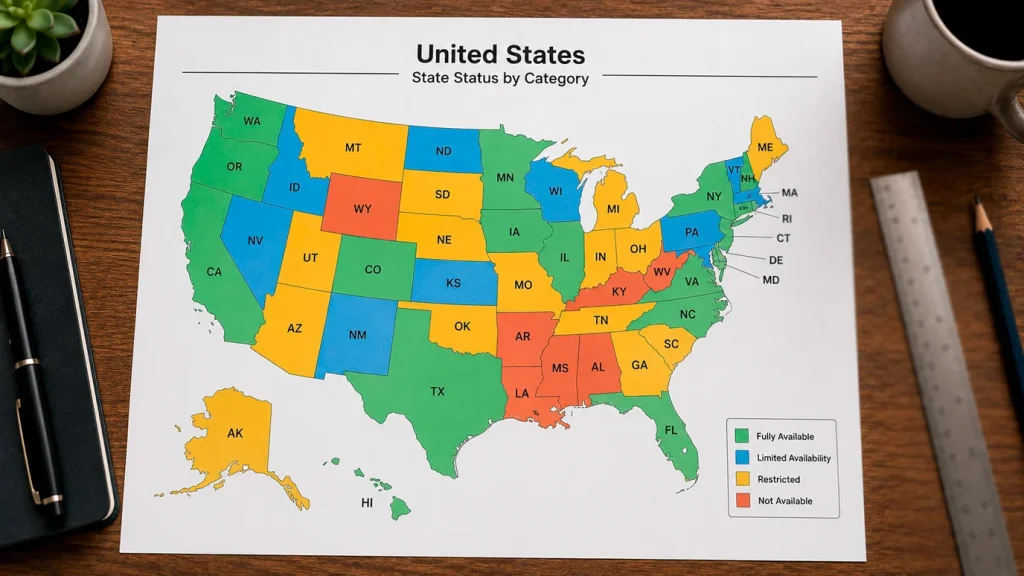
The wrinkle for sweepstakes casino players is that your tax obligation may be determined by the state where you were physically located when you played, not your state of residence. If you live in Texas — which has no state income tax — but played while visiting New York, the winnings from that session could theoretically be subject to New York state tax. The practical enforcement of this across sweepstakes casinos is minimal, but the legal exposure exists.
States that have banned sweepstakes casinos present a different scenario. If you accumulated SC before the ban and redeemed them after the effective date from an eligible state, the tax obligation follows the redemption event. The ban affects access to the platform, not the tax treatment of prior winnings.
When Operators Issue Tax Forms
Operator practices on tax reporting are inconsistent across the industry, which is a direct consequence of the regulatory ambiguity surrounding sweepstakes casinos. Traditional gambling operators licensed by state gaming commissions have clear, standardized reporting requirements. Sweepstakes casinos, operating outside that regulatory framework, make their own determinations about reporting thresholds and form types.

Some operators issue W-2G forms for individual redemptions above $600. Others track cumulative annual redemptions and issue forms if the total exceeds $600 for the calendar year. A few issue 1099-MISC forms instead, classifying payouts as “other income” rather than gambling winnings. From a tax liability perspective, the distinction between W-2G and 1099-MISC does not change the amount you owe — the income is taxable either way — but it can affect how you report it on your return and whether you need to file additional schedules.
If you do not receive any tax form from an operator, that does not eliminate your reporting obligation. The IRS expects taxpayers to report all income regardless of whether they receive a form documenting it. Maintaining your own records of redemption dates, amounts, and payment methods is the most reliable approach to accurate tax reporting.
Can You Deduct Gold Coin Purchases?
This is the question I hear most often, and the answer is genuinely complicated. Under IRS rules, gambling losses can be deducted against gambling winnings — but only up to the amount of winnings reported, and only if you itemize deductions rather than taking the standard deduction. You cannot deduct gambling losses in excess of your winnings, and you cannot carry losses forward to future tax years.

The sweepstakes casino twist is whether Gold Coin purchases qualify as “gambling losses” for deduction purposes. Operators explicitly state that Gold Coin purchases are not gambling — they are purchases of virtual entertainment currency with bonus SC attached as a promotional element. If the purchase is not gambling, the “loss” from that purchase may not qualify as a deductible gambling loss. This is an area where tax law and the sweepstakes business model collide in ways that have not been fully resolved through IRS guidance or case law.
A conservative approach treats Gold Coin purchases as non-deductible personal entertainment expenses — similar to buying tokens at an arcade. An aggressive approach treats them as gambling wagers deductible against SC redemption income. The right answer depends on your specific situation, and this is one area where consulting a tax professional familiar with gambling income is genuinely worth the cost. The line between sweepstakes prizes and gambling winnings remains legally blurry, and that ambiguity directly affects how deductibility applies.
Whatever position you take, documentation is essential. Keep records of every Gold Coin purchase (date, amount, payment method), every SC redemption (date, SC amount, dollar value, payment method), and any tax forms received from operators. If the IRS questions your return, detailed records are your primary defense.
Are sweepstakes casino winnings taxed the same as lottery prizes?
The tax rate is similar — both are treated as ordinary income at the federal level — but the reporting mechanics differ. Lottery winnings above $5,000 are subject to mandatory 24% federal withholding at the time of payment. Sweepstakes casino redemptions typically do not involve withholding; instead, the full amount is paid to you and you are responsible for reporting and paying the tax when you file your return. State tax treatment varies for both categories.
What records should I keep for sweepstakes casino tax reporting?
Maintain a log of every SC redemption including the date, SC amount, dollar value received, and payout method. Also keep records of all Gold Coin purchases with dates, amounts, and payment methods. Save any tax forms received from operators — W-2G or 1099-MISC. If you play across multiple platforms, track each one separately. Bank and payment processor statements showing deposits from sweepstakes casinos serve as backup documentation. Organized records are essential for accurate reporting and for supporting your return if the IRS requests verification.
The full ranking is in our guide to the best US sweepstakes casinos.
Tax follows the redemption: the payout guide.
Articles
Prepared by the Best Sweepstakes Casinos US editorial staff.